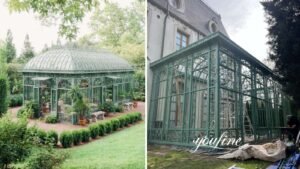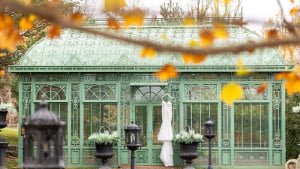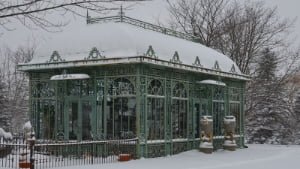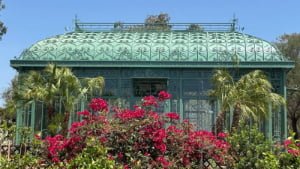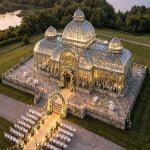
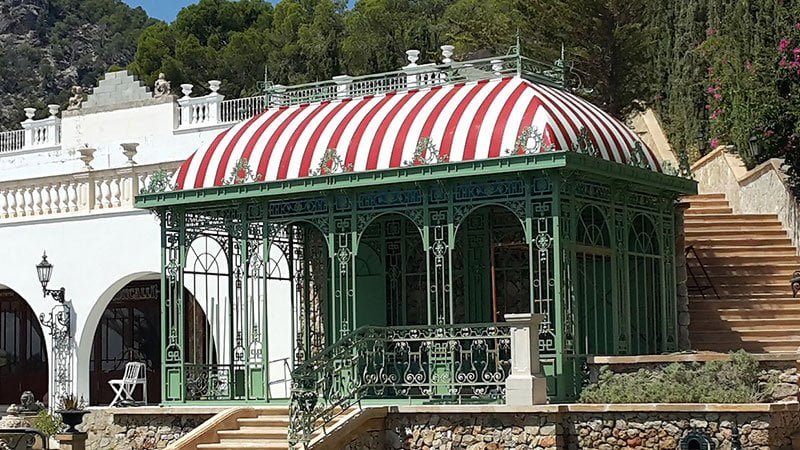
Choosing the wrong greenhouse for your climate can lead to heat loss, storm damage, rust, and costly maintenance. Discover the best greenhouse types for snowy, hot, windy, and humid regions, and why wrought iron conservatories are the long-term solution.
Buying a greenhouse is exciting. Many homeowners imagine a bright glass structure filled with flowers, herbs, or simply a relaxing garden retreat. However, one critical fact is often overlooked before purchasing: Not every greenhouse is designed to perform well in every climate.
An iron greenhouse that works beautifully in a mild Mediterranean garden may become a maintenance nightmare in a snowy northern region. Likewise, a lightweight plastic greenhouse that seems affordable at first may quickly fail in areas with strong winds, heavy rain, or scorching summer heat.
In other words, choosing a greenhouse should never be based on appearance alone. It should begin with one question: What kind of climate will this greenhouse need to survive?
Because climate affects far more than plant growth. It directly determines:
- structural durability
- internal temperature balance
- ventilation efficiency
- long-term maintenance cost
- even the lifespan of the greenhouse itself
Modern greenhouse engineering research consistently shows that greenhouse structure, covering material, and ventilation design all work together to shape the internal microclimate and long-term energy performance.1
This guide will help you understand the different types of greenhouses available today and how to choose the right one for cold, hot, windy, humid, or mixed climate conditions.
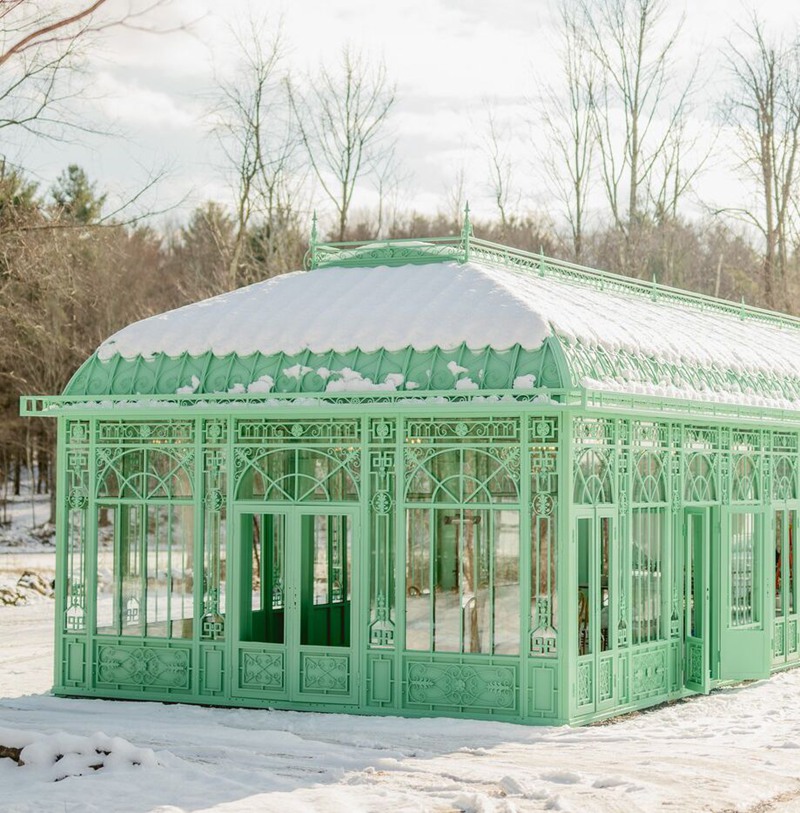
Why Climate Should Be the First Thing You Consider Before Buying a Greenhouse
Most buyers naturally focus on: the style, the size, the initial budget, or the visual beauty of the greenhouse.
Those are important—but they are not the first priority.
A greenhouse is not just a decorative garden structure. It is a controlled environment building.
That means the outdoor climate is constantly pushing against it:
- snow presses downward
- wind pushes sideways
- sunlight creates overheating
- humidity causes condensation
- rain and salt air attack the frame finish
If the structure is not designed to handle those forces, problems begin quickly:
Common Results of Choosing the Wrong Greenhouse for Your Climate
1. Structural Damage
- Weak roof systems bend under snow loads.
- Light frames shake in windstorms.
- Doors and windows begin misaligning.
2. Poor Internal Growing Conditions
- Too much trapped heat in summer.
- Too much heat loss in winter.
- High humidity leading to mold and disease.
A greenhouse with poor climate adaptation often forces the owner to “fight the building” instead of enjoying the plants.
3. Rising Energy and Maintenance Costs
You spend more on: heaters, cooling fans, dehumidifiers, repairs, rust treatment, replacement panels.
4. Shortened Lifespan
What looked cheaper at the beginning becomes far more expensive after five years.
As many greenhouse users discuss in practical grower communities, the issue is rarely just “keeping plants inside.” The real challenge is maintaining a stable microclimate without constant correction.2
That is why professional greenhouse buyers do not ask:
“Which greenhouse looks best?”
They ask:
“Which greenhouse performs best where I live?”
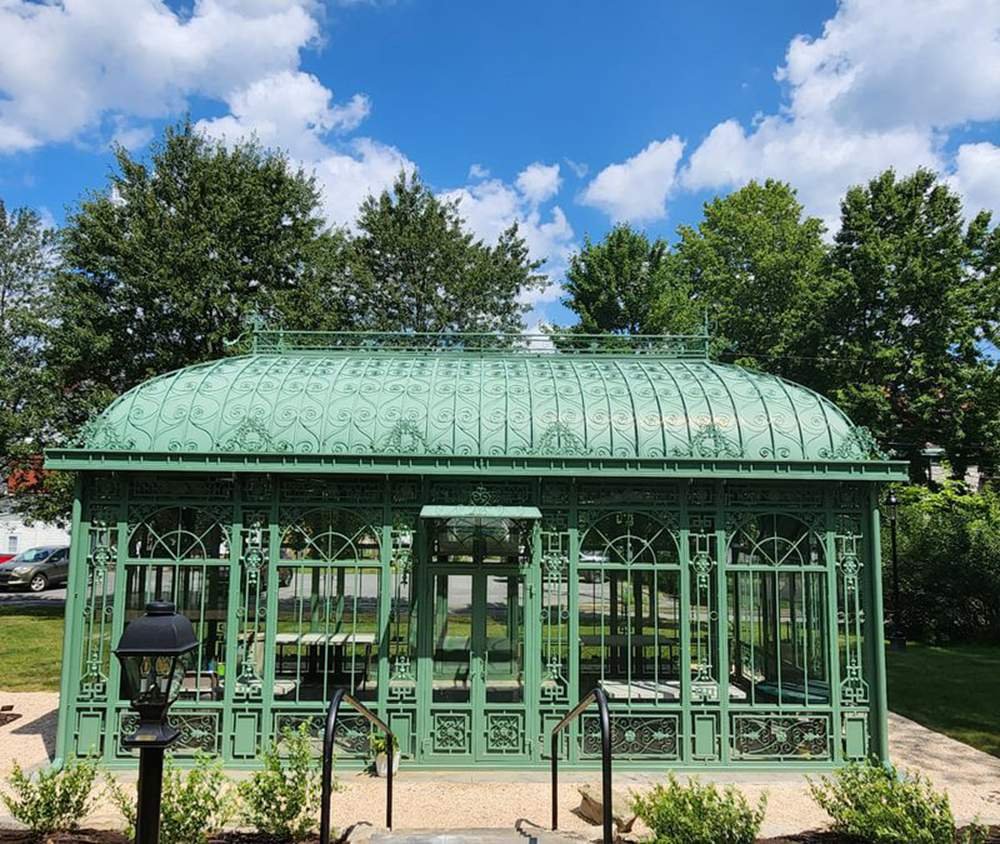
Common Types of Greenhouses and Their Climate Performance
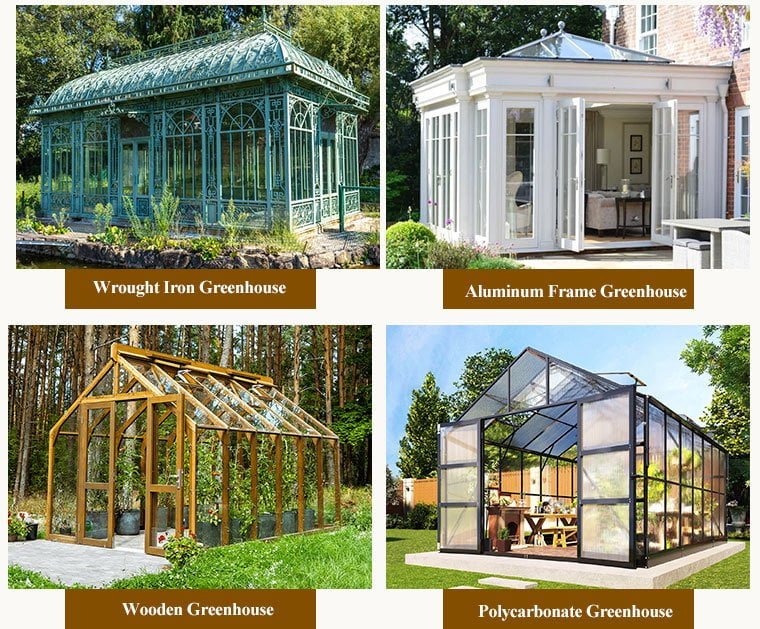
Before matching greenhouse types to climate, it is helpful to understand the four main categories most commonly found on the market.
| Greenhouse Type | Main Material | Key Advantages | Main Limitations | Typical Lifespan | Best For |
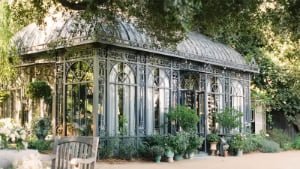
| Wrought Iron Greenhouse Conservatory | Heavy wrought iron/steel frame + tempered glass | Superior strength, elegant luxury appearance, highly customizable, supports all-season use | Higher initial investment | 30+ years | Permanent luxury greenhouse and complex climates |
| Aluminum Frame Greenhouse | Aluminum alloy + glass/polycarbonate panels | Rust-resistant, modern appearance, low maintenance | Moderate structural strength, less ideal for extreme climates | 8–15 years | Mild residential climates |
| Wooden Greenhouse | Timber frame + glass/polycarbonate panels | Natural beauty, decent insulation, classic garden style | Moisture damage, termite risk, frequent sealing and repainting | 8–12 years | Cottage gardens and moderate climates |
| Plastic / Polycarbonate Greenhouse | Plastic sheets + light metal frame | Budget-friendly, easy DIY assembly, lightweight | Weak against heavy snow, strong wind, and long-term UV exposure | 3–8 years | Seasonal hobby gardening |
From this comparison, it becomes clear that different greenhouse materials are built for very different purposes.
Some are designed simply for short-term gardening convenience, while others are engineered as permanent architectural structures capable of withstanding demanding weather conditions for decades.
This difference becomes even more important when we compare greenhouse performance in specific climates.
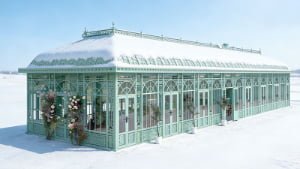
Best Greenhouse Types for Cold and Snowy Climates
Cold climates are among the most challenging greenhouse environments.
Typical regions include:
- Canada
- Northern United States
- Northern Europe
- mountain areas
Here, the greenhouse must deal with two major enemies: snow load and heat loss.
A visually attractive greenhouse means very little if: the roof cannot support accumulated snow, or the inside loses warmth too rapidly every night.
Many greenhouse owners in colder zones report that insulation and structural mass become the defining factor between a usable winter greenhouse and a decorative glass box.
Climate Challenges in Cold Regions
- prolonged freezing nights
- heavy snow sitting on roof glazing
- reduced winter sunlight
- interior condensation
- expensive heating demand
For this reason, the ideal greenhouse for cold climates must offer:
- strong roof load capacity
- thick framing
- double glazing or insulated glass
- tightly sealed doors and vents
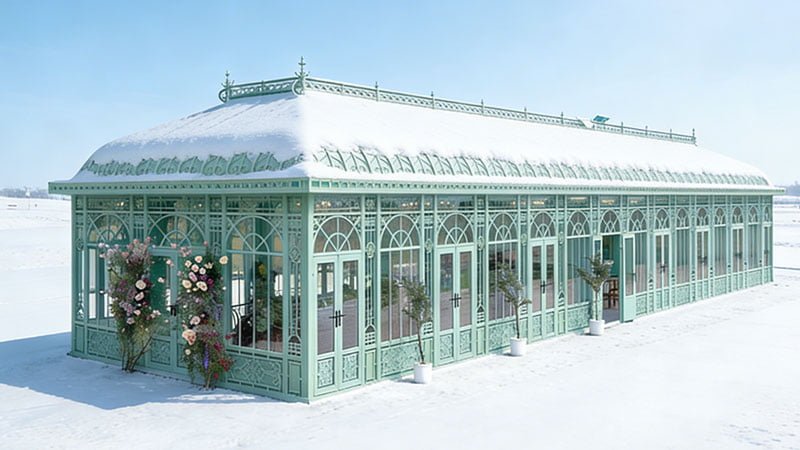
Best Recommendation: Heavy Wrought Iron Greenhouse with Insulated Glass
A wrought iron conservatory performs exceptionally well here because:
Stronger Snow Bearing Capacity
Heavy welded frame construction handles roof pressure much better than lightweight kits.
Better Heat Retention Potential
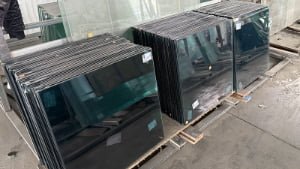
The frame can support double-glazed tempered glass systems.
Less Structural Deformation Over Time
Cold contraction and expansion put stress on weaker bolt systems, while welded iron frames remain more stable.
Easier Integration of Heating Equipment
Because the greenhouse is built as a permanent structure, heaters, thermal curtains, and sealed foundations can be integrated more professionally. For homeowners in cold regions, this often means the difference between:
“a greenhouse I can use all winter”
and
“a greenhouse that only looks nice when it is not snowing.”
Best Greenhouse Types for Hot and Sunny Climates
Many people assume warm climates are easy for greenhouses.
Actually, the opposite is often true.
In hot regions, the greenhouse can turn into an oven if the structure does not release heat effectively.
Temperatures inside a poorly ventilated greenhouse can rise dramatically above outdoor ambient temperature, especially under strong solar radiation.3
Common hot-climate regions include:
- Arizona
- Texas
- Southern California
- Australia
- Middle East
Main Problems in Hot Climates
- overheating
- leaf scorch
- trapped humidity
- insufficient air movement
- high cooling equipment demand
Here, insulation is not the main issue. Ventilation volume is.
That means buyers should focus on:
- higher roof design
- operable roof vents
- side windows
- shading compatibility
- strong frame support for cooling accessories
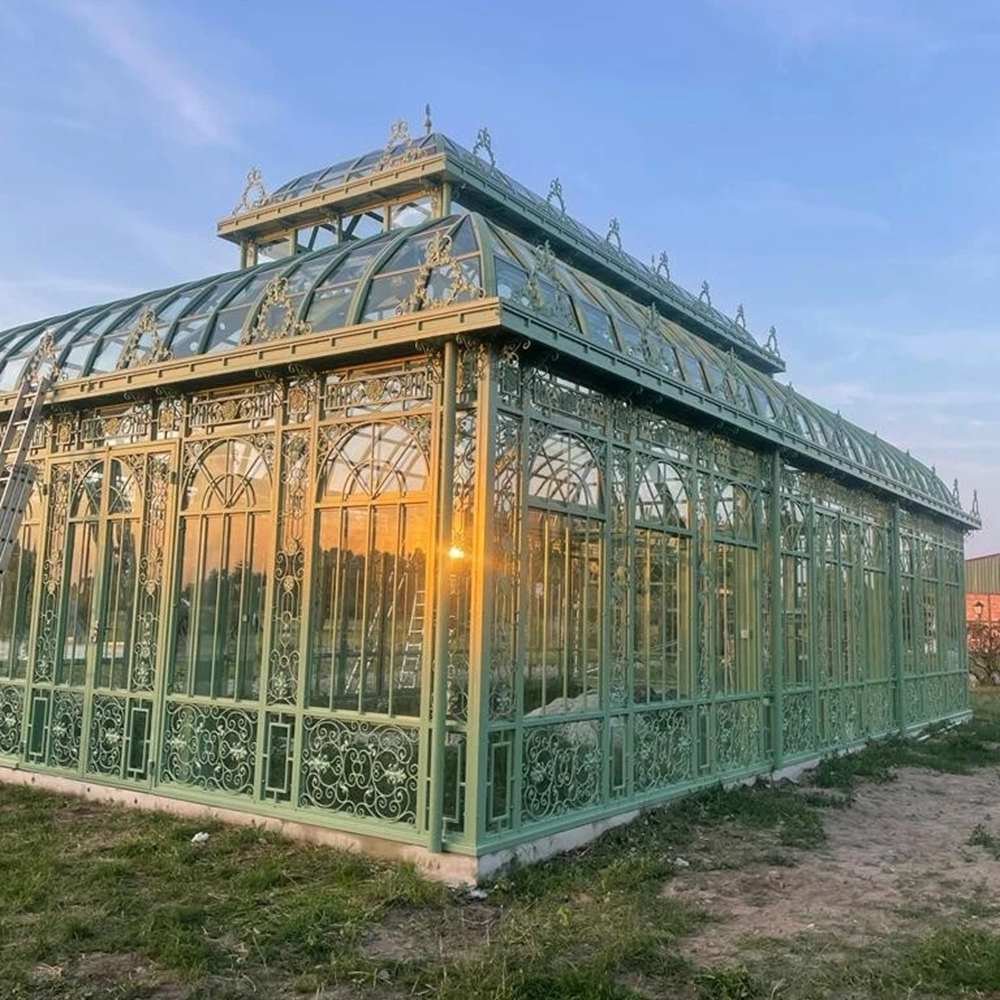
Best Recommendation: Tall Wrought Iron Conservatory with Ventilation System
Wrought iron greenhouses perform better than many DIY kits in hot climates because the heavier frame allows:
- larger roof opening systems
- wider side ventilation windows
- retractable sunshade installation
- higher ceiling spans that let hot air rise
As growers often note, greenhouse height and air volume strongly influence how effectively heat can stratify and escape.4
In simple words: a taller engineered conservatory breathes better than a low lightweight greenhouse.
This makes wrought iron structures far more comfortable for both plants and people in summer environments.
Best Greenhouse Types for Windy and Coastal Climates
Some greenhouse owners worry about snow.
Others worry about heat.
But in coastal and open plain regions, the biggest threat is often something less visible:
constant wind pressure and sudden storm uplift.
This includes areas such as:
- coastal homes
- lakeside gardens
- open countryside
- mountain ridges
- hurricane-prone zones
In these locations, the greenhouse is not simply standing in the yard.
It is constantly fighting:
- lateral wind push
- roof uplift
- frame vibration
- repeated joint fatigue
Structural studies have shown that wind and snow are the two dominant external loads that most often determine greenhouse failure, especially when the frame is too light or the anchoring is insufficient.5
This is exactly why so many hobby greenhouse kits look fine in advertisements but struggle in real storms.
Growers in high-wind communities repeatedly point out the same lesson:
once wind gets underneath or into a lightweight greenhouse, the frame begins to flex, twist, or collapse.
Common Climate Challenges in Windy Areas
- strong side gusts loosening glazing panels
- shaking doors and vent windows
- roof uplift in storms
- unstable lightweight foundations
- long-term metal fatigue at bolted joints
This means buyers should not only think about “greenhouse size.”
They should think about:
foundation anchoring + welded frame rigidity + glass fixation strength.
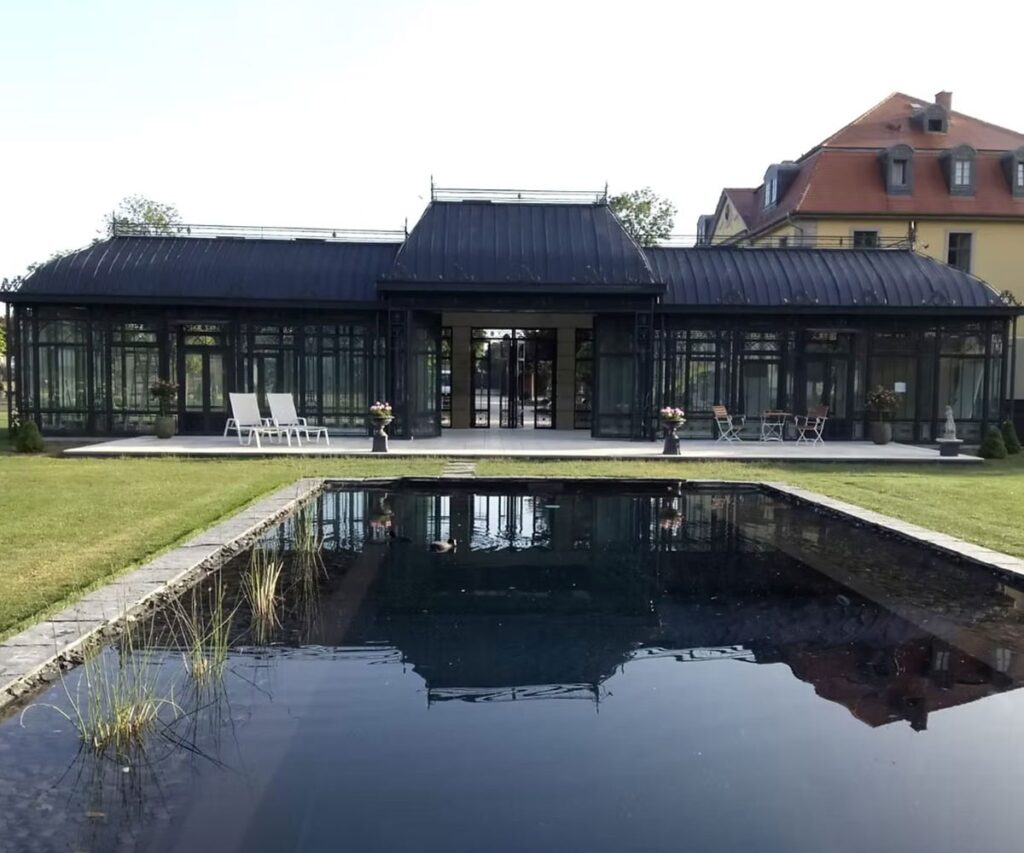
Best Recommendation: Anchored Wrought Iron Glass Greenhouse
A heavy wrought iron greenhouse conservatory is far more suitable for windy climates because it offers:
Rigid Welded Structural Joints
Unlike thin bolt-together kits, welded iron framing distributes wind force more evenly.
Greater Self Weight
A heavier structure naturally resists uplift better than light aluminum or plastic units.
Stronger Foundation Integration
The greenhouse can be permanently fixed into concrete or masonry base systems.
Better Glass Retention
Tempered glass can be secured with stronger channels and pressure systems.
In simple terms: windy regions do not reward lightweight greenhouse shortcuts. They reward engineering mass.
Best Greenhouse Types for Humid and Rainy Climates
Humid climates create a different kind of enemy.
Not a dramatic collapse.
But a slow structural decline.
Typical humid greenhouse regions include:
- the UK
- southeastern United States
- tropical gardens
- rainy coastal areas
In these climates, greenhouse owners face:
- constant condensation
- moisture accumulation
- mold formation
- paint deterioration
- corrosion risk
And unlike snow or wind damage, humidity damage is deceptive.
The greenhouse may still “look okay” for years while internal rust, wood decay, or glazing seal failure quietly builds.
Why Some Greenhouses Age Poorly in Humid Conditions
Cheap greenhouse structures often fail here because:
- thin metal coatings begin to peel
- wooden frames absorb moisture
- low ventilation traps damp air
- roof dripping becomes constant
This is especially frustrating because humidity does not just affect the building.
It affects the plants too.
Too much trapped moisture can increase:
- fungal disease
- mildew
- algae growth
- root instability
Best Recommendation: Galvanized Wrought Iron Greenhouse with Efficient Ventilation
Many buyers assume iron means rust.
That is only true for outdated untreated iron.
Modern wrought iron greenhouse conservatories are typically protected through:
- hot-dip galvanization
- anti-rust epoxy primer
- outdoor fluorocarbon paint systems
- sealed drainage detailing
Combined with:
- roof vents
- side windows
- optional circulation fans
the greenhouse can maintain a much healthier moisture balance.
So instead of becoming a damp glass box, it remains a breathable year-round conservatory.
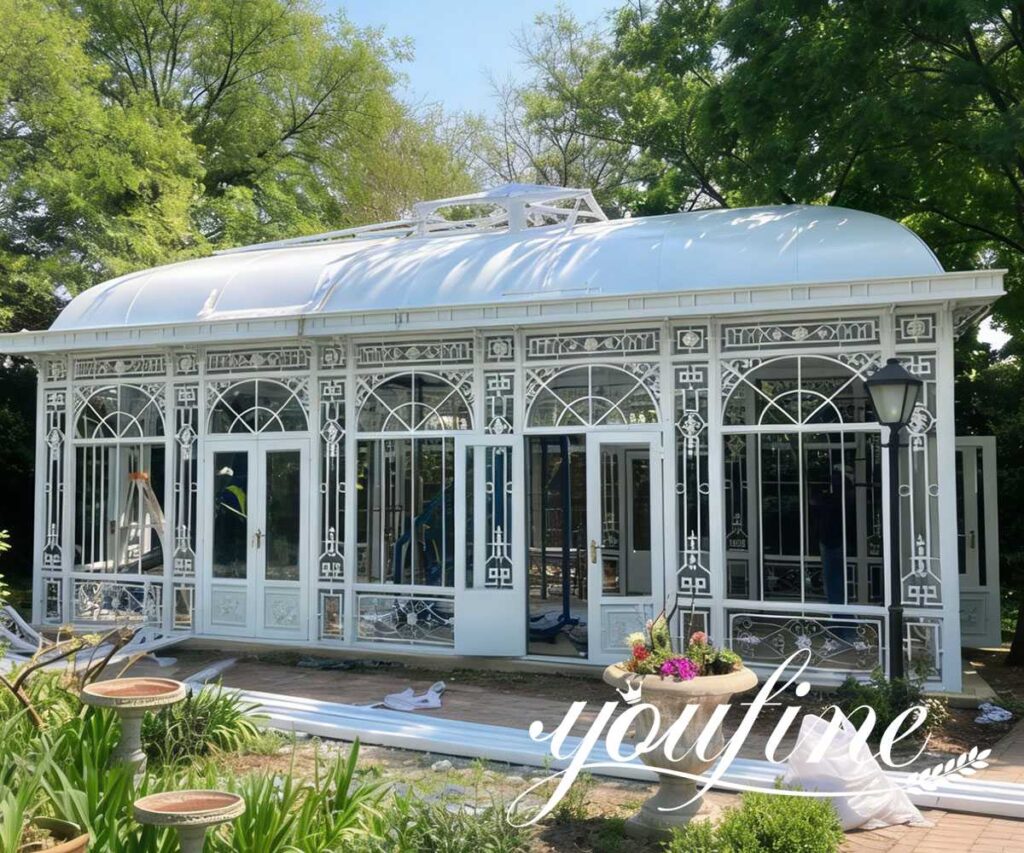
Why Wrought Iron Greenhouse Conservatories Are Becoming the Preferred Long-Term Choice
Years ago, people bought greenhouses mainly for seedlings and winter vegetables. Today, buyers expect much more.
A greenhouse is increasingly used as:
- a private botanical room
- a glass tea house
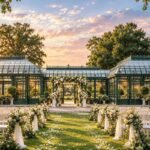
- a wedding garden structure
- an outdoor dining conservatory
- a luxury backyard retreat
In other words:
homeowners no longer want a seasonal gardening shed. They want a permanent lifestyle space. And that changes everything. Because once the greenhouse becomes:
- part of the home
- part of the landscape
- part of the property’s architectural identity
temporary lightweight materials no longer feel like a smart investment.
This is exactly why wrought iron greenhouse conservatories continue growing in popularity:
They are climate-adaptable.
Custom engineering can be adjusted for snow, wind, heat, or rain.
They are visually timeless.
Victorian elegance and modern glasshouse beauty never go out of style.
They are structurally permanent.
They are built like architecture, not like garden accessories.
They increase property value.
A custom conservatory becomes a destination point on the estate.
So the buying decision changes from:
“Which greenhouse is cheapest?”
to
“Which greenhouse is worth building once and enjoying for decades?”
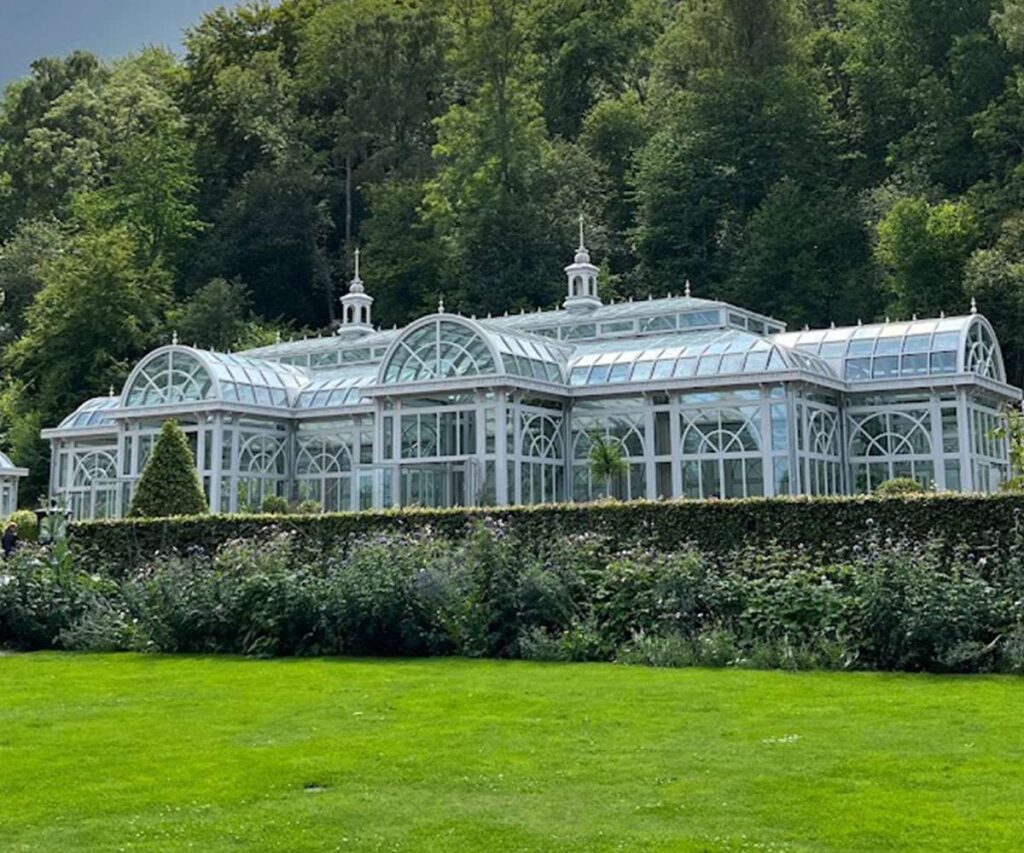
YouFine Custom Builds Wrought Iron Greenhouses for Every Climate Worldwide
At YouFine, we understand that no two climates ask for the same greenhouse solution.
A client in snowy Canada needs something entirely different from a client in sunny Texas or a windy coastal villa.
That is why our wrought iron greenhouse conservatories are never treated as one-size-fits-all kits.
We custom engineer each structure based on:
- local climate conditions
- required snow load
- wind resistance standards
- ventilation demand
- glass insulation level
- architectural style preference
Available custom options include:
- double-glazed tempered glass
- operable roof vent systems
- insulated wall base
- anti-rust galvanized frame treatment
- Victorian decorative ironwork
- modern minimalist conservatory style
Whether the goal is:
- year-round gardening
- luxury backyard entertaining
- botanical display
- or commercial event use
a properly designed wrought iron greenhouse can perform beautifully for decades.
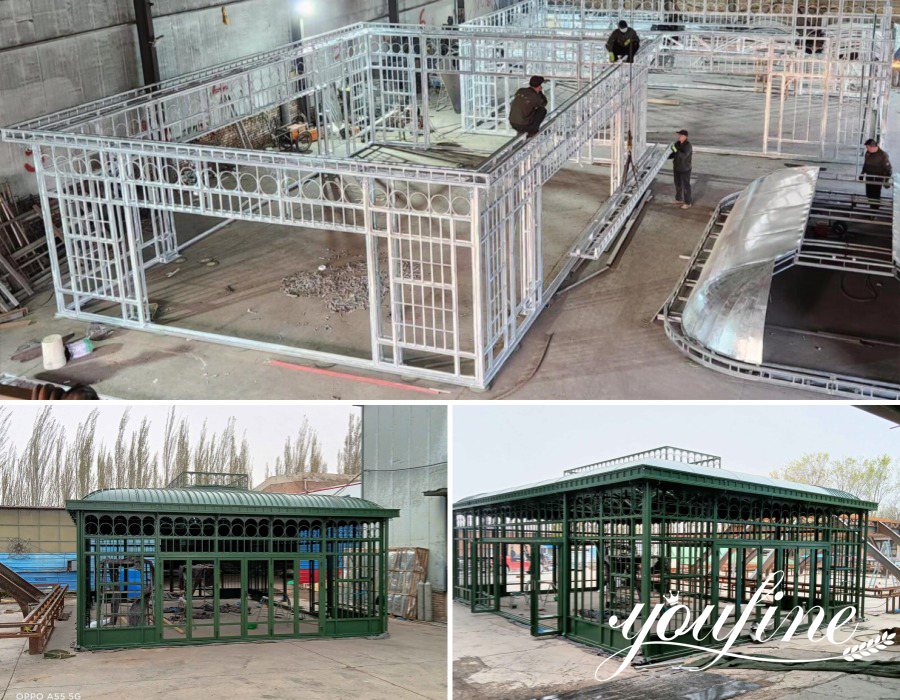
Conclusion
A greenhouse always looks beautiful on installation day. But the real test begins after:
- the first snowstorm
- the first heatwave
- the first coastal gale
- the first rainy season
That is when material quality, frame strength, and climate engineering begin to matter.
A greenhouse chosen only for low price may become an ongoing repair project.
A greenhouse chosen for climate performance becomes a long-term asset.
So before deciding on size, style, or even budget, ask yourself one simple question:
Is this greenhouse truly built for the weather I live in?
If the answer is yes, you are not just buying a greenhouse. You are building a lasting conservatory experience.
FAQ:
FAQ 1: What type of greenhouse is best for cold climates?
Heavy-duty wrought iron or steel greenhouses with insulated glass are best for cold climates because they offer stronger snow resistance and better heat retention.
FAQ 2: Which greenhouse works best in hot climates?
Tall greenhouses with roof ventilation, shading systems, and strong airflow perform best in hot sunny regions.
FAQ 3: Are wrought iron greenhouses suitable for humid climates?
Yes. Modern wrought iron greenhouses use galvanized anti-rust treatment, making them highly durable even in rainy or humid environments.
FAQ 4: What greenhouse material lasts the longest?
Among plastic, aluminum, wood, and iron, wrought iron conservatories generally offer the longest lifespan and strongest permanent structure.
FAQ 5: Is a wrought iron greenhouse worth the investment?
For buyers seeking long-term durability, luxury appearance, and year-round use, a wrought iron greenhouse is often the most cost-effective investment over decades.
- A Review of Environmental Control Strategies and Models for Modern Agricultural Greenhouses ↩︎
- Greenhouse Size vs. Warmth — A Community Discussion Topic Posted by a User ↩︎
- GREENHOUSE CHARACTERISTICS AND MICROCLIMATIC CONDITIONS ↩︎
- A discussion initiated by a user in the community: What influences how much tall a greenhouse is? ↩︎
- Wind Pressure Coefficients on Greenhouse Structures by Chrysanthos Maraveas ↩︎