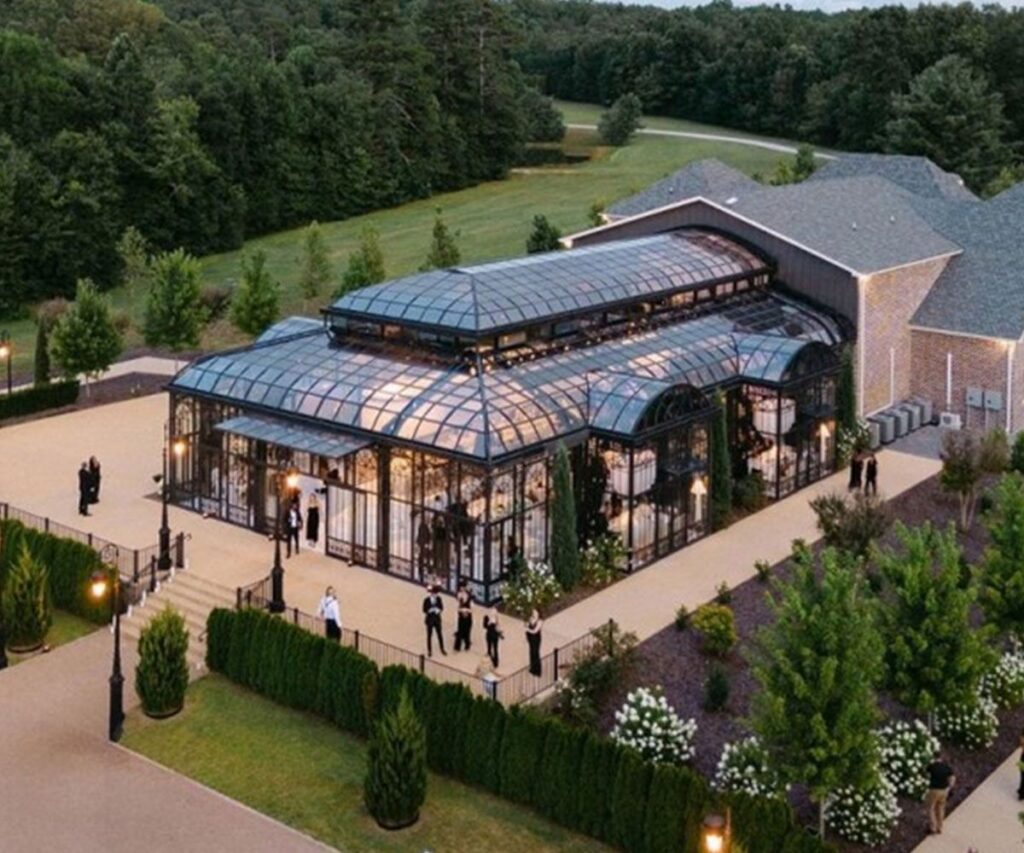
When planning a wrought iron greenhouse, most clients start with one simple question: “How thick is the glass?”
It sounds logical. Thicker materials should be stronger, right?
Not exactly.
In fact, when it comes to conservatory glass, focusing only on thickness can lead to poor performance, higher risk, and even safety issues. After working in the industry for over a decade, I’ve seen many projects fail—not because the glass was too thin, but because the wrong type of glass was used.
The truth is simple: glass strength is determined by engineering, not thickness.
1. Why Thicker Glass Isn’t Always Better
It’s easy to assume that thicker glass equals higher safety. But standard thick glass comes with several hidden problems:
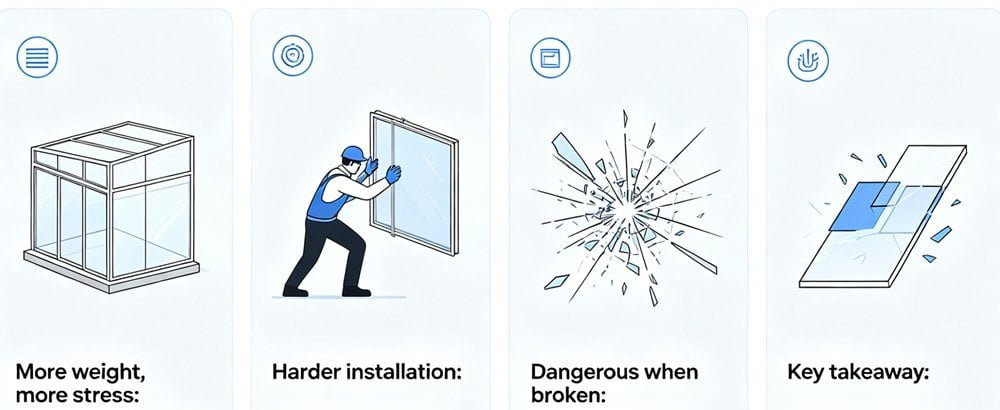
More weight, more stress
Heavier glass puts significant pressure on the frame—especially critical for conservatory roofs.
Harder installation
Thick panels are more difficult to handle and install, increasing the risk of edge damage (a major cause of breakage).
Dangerous when broken
Ordinary thick glass shatters into sharp, jagged pieces, posing serious injury risks.
From real project experience, many failures are not due to glass being “too thin,” but due to using untreated thick glass instead of engineered safety glass.
Thickness without proper treatment is not strength—it’s a liability.
2. The 3 Technologies That Actually Make Glass Strong
Instead of asking “how thick,” the right question is: “How is the glass engineered?”
2.1 Tempered Glass (Heat-Treated Strength)
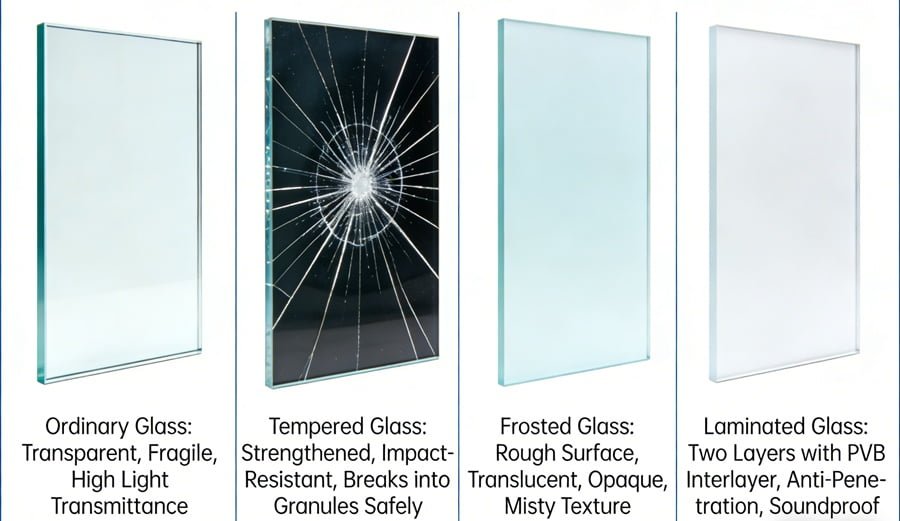
Tempered glass is produced by heating the glass to high temperatures and rapidly cooling it.
- 4–5 times stronger than standard glass
- Surface compression improves impact resistance
- Breaks into small, blunt granules instead of sharp shards
This makes it a core safety material, especially for exterior and roof panels.
2.2 Laminated Glass (Built-In Safety Layer)
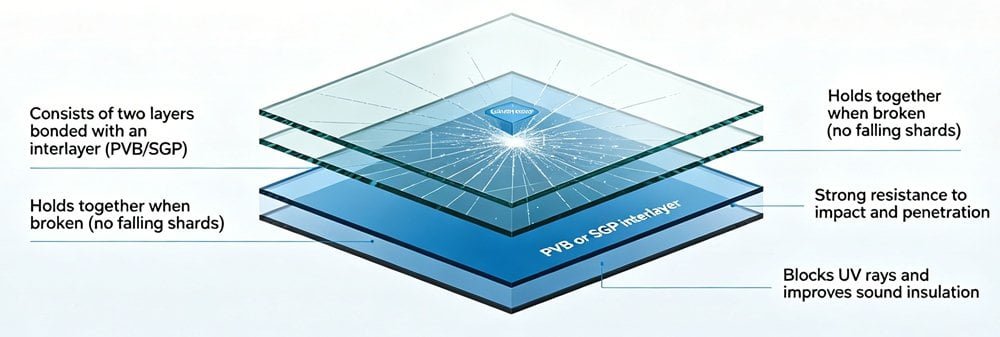
Laminated glass consists of two layers bonded with an interlayer such as PVB or SGP.
- Holds together when broken (no falling shards)
- Strong resistance to impact and penetration
- Blocks UV rays and improves sound insulation
Not all laminated glass is equal:
- PVB = standard performance
- SGP (structural interlayer) = significantly stronger, ideal for large spans and roofs
This is critical for overhead glazing where safety is non-negotiable.
2.3 Low-E Coating (Invisible Performance Boost)
Low-E (low emissivity) coating is a microscopic metal layer applied to glass.
- Reflects heat while allowing light through
- Keeps interiors warm in winter and cool in summer
- Improves energy efficiency without increasing thickness
Important detail: Soft-coat Low-E must be sealed inside an insulated glass unit (IGU) for durability.
3. The Real Upgrade: Insulated Glass Units (IGU)
Modern conservatories don’t rely on single glass panels—they use glass systems.
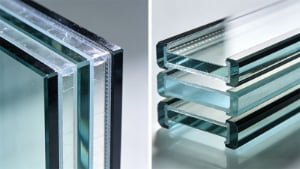
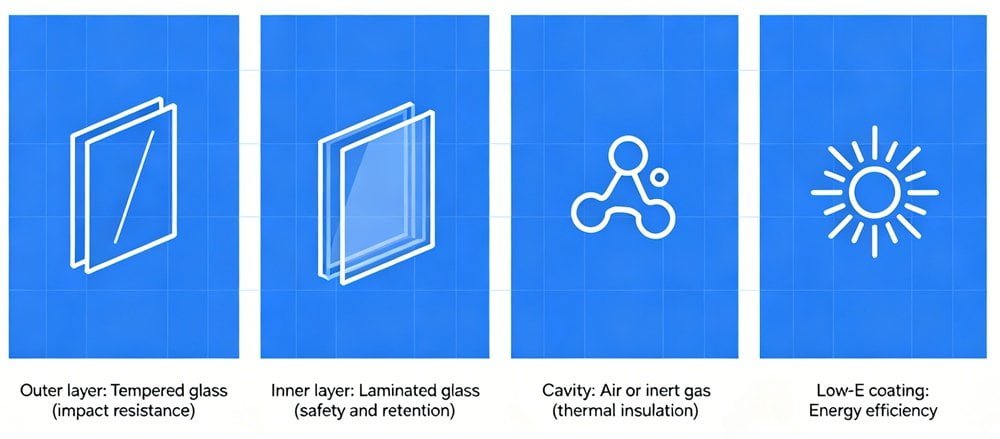
A high-performance IGU typically includes:
- Outer layer: Tempered glass (impact resistance)
- Inner layer: Laminated glass (safety and retention)
- Cavity: Air or inert gas (thermal insulation)
- Low-E coating: Energy efficiency
Why This Matters
- Thick single glass = heavy, unsafe, inefficient
- Engineered IGU = strong, safe, energy-efficient
A well-designed IGU can outperform glass that is twice as thick but poorly engineered.
4. The Real Reasons Glass Breaks
Here’s something most suppliers won’t tell you: Glass rarely breaks because it’s “too thin.”
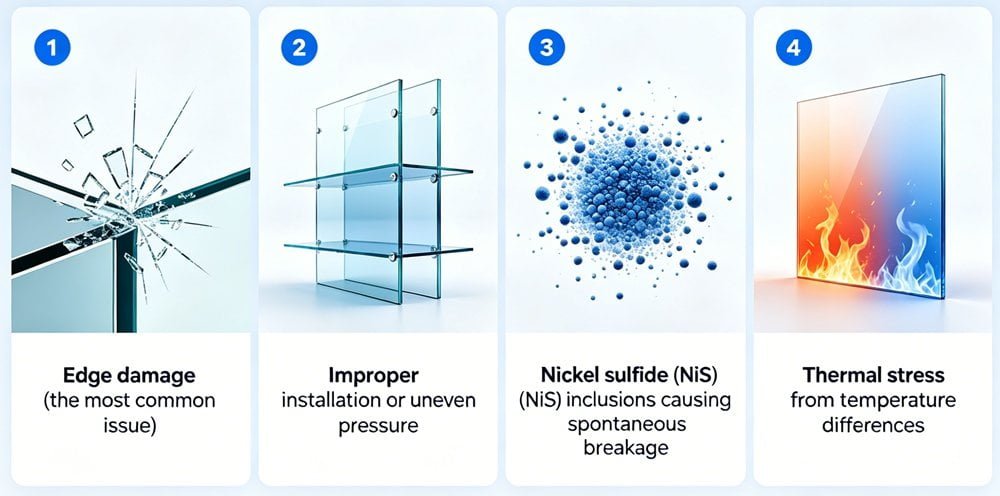
The real causes are:
- Edge damage (the most common issue)
- Improper installation or uneven pressure
- Nickel sulfide (NiS) inclusions causing spontaneous breakage
- Thermal stress from temperature differences
Most failures start at the edge—not in the center, and not due to thickness.
5. What Smart Buyers Should Ask Instead
Instead of asking “How thick is the glass?”, ask these four questions:
- Is the glass tempered, laminated, or both?
- What interlayer is used (PVB or SGP)?
- Is it fully tempered or partially tempered?
- Is the Low-E coating sealed inside an IGU?
If a supplier cannot clearly answer these questions, glass thickness alone will not guarantee safety.
6. Common Mistakes to Avoid
- Choosing glass based only on thickness
- Using single-layer glass for roofing
- Ignoring installation quality
- Selecting the wrong Low-E type
- Using low-quality laminated interlayers
Each of these mistakes can compromise the entire structure.
Conclusion
In conservatory design, performance comes from how materials work together, not how thick they are.
True glass strength comes from:
- Tempering
- Laminating
- Insulated glass systems
- Proper installation
In the end, strength is engineered—not measured in millimeters.
Need Help Choosing the Right Glass?
Every conservatory is different. The ideal glass configuration depends on:
- Climate conditions
- Structure size and span
- Roof vs wall application
- Safety requirements
If you’re planning a project, we can help you choose the right solution—not just the thickest one.
Contact us for a customized conservatory glass recommendation.