If you have ever experienced a leaking iron greenhouse during heavy rain or seen a structure damaged after a storm, you are not alone.
Most greenhouse failures come down to a few critical issues:
Water leakage through weak sealing systems
Structural deformation under strong wind or snow loads
Roof panels being lifted or damaged during storms
The root cause is simple:
Most greenhouses are designed to meet minimum standards—not to survive extreme conditions.
At YouFine, we take a completely different approach. Instead of building to the lowest acceptable level, we engineer every greenhouse with a redundant protection system—a design philosophy that eliminates single points of failure.
YouFine Design Philosophy: No Single Point of Failure
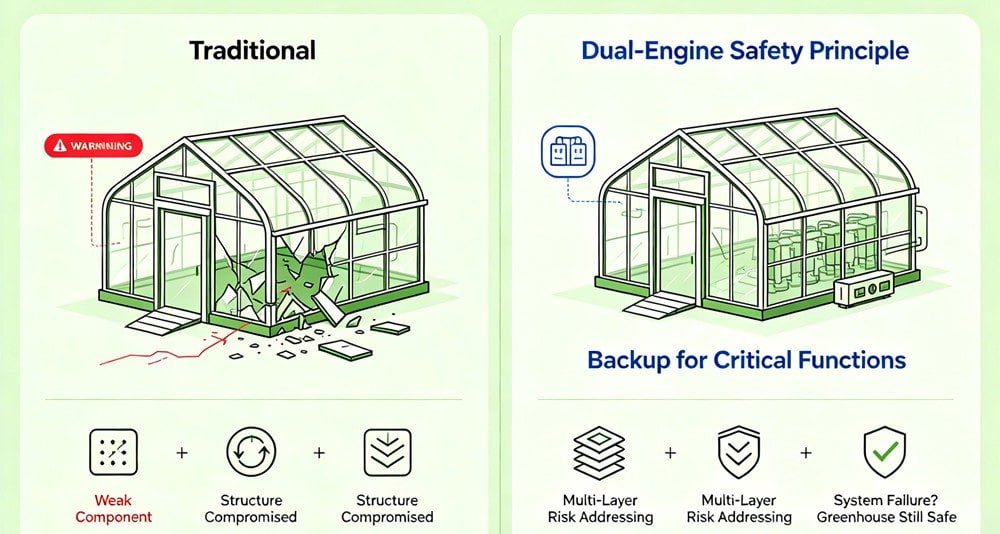
In many traditional greenhouse designs, one weak component can compromise the entire structure.
We reject that approach.
Our system is built on the concept of redundancy, similar to the dual-engine safety principle used in aviation:
- Every critical function has a backup
- Every structural risk is addressed from multiple layers
- Even if one system fails, the greenhouse remains safe and functional
This is not just stronger—it is smarter and safer by design.
Core Protection System Breakdown
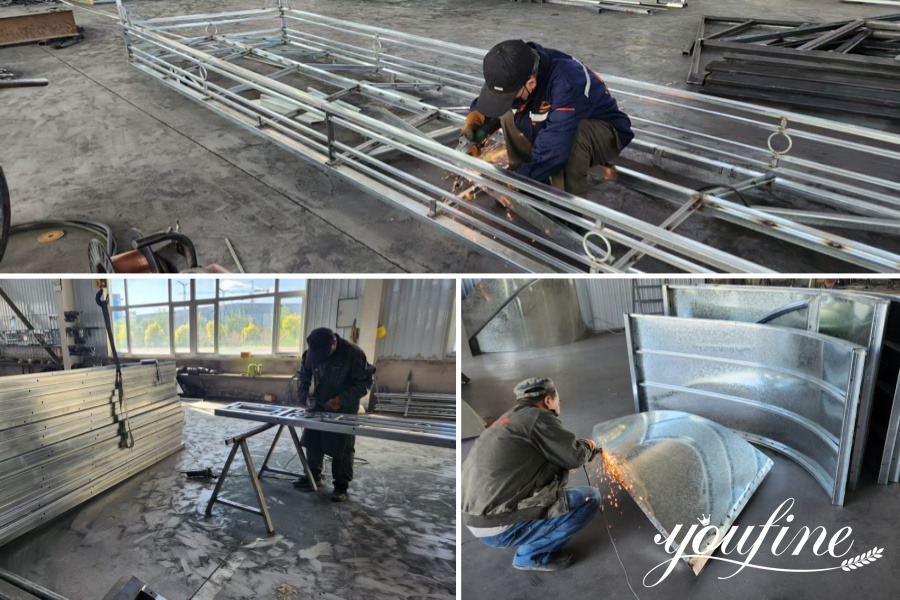
1. Reinforced Structural Frame (Primary + Secondary Support)
The foundation of any durable greenhouse is its frame.
We use:
- 6063-T5 high-strength aluminum alloy
- Internal steel reinforcements at key stress points
- Multi-chamber profile design
- This combination significantly improves:
- Wind resistance
- Snow load capacity
- Torsional stability (anti-twisting performance)
Unlike single-layer aluminum structures, our system distributes stress across multiple chambers, reducing the risk of deformation or collapse.
2. Impact-Resistant Laminated Glass System
Glass failure is one of the most overlooked risks in greenhouse design.
Our solution combines:
Tempered glass (for strength)
Laminated glass (for safety and integrity)
Key benefits:
- Higher impact resistance
- No dangerous shattering—glass remains bonded even when cracked
- Maintains enclosure integrity during storms
This means even under impact, your greenhouse continues to block wind and rain from entering.
3. Smart Roof Protection Mechanism
The roof is the most vulnerable part of any greenhouse in extreme weather.
We address this with a dual protection system:
- Double mechanical locking system
- Smart weather sensors (wind & snow detection)
How it works:
- Under normal conditions → roof stays securely locked
- Under extreme load → system automatically retracts to release pressure
- Prevents uplift and structural damage
This transforms the roof from a passive structure into an active defense system.
4. Dual Waterproofing Strategy: Seal + Drain
Most greenhouse leaks happen because of poor waterproofing design.
We go beyond simple sealing with a two-layer approach:
Layer 1: Sealing
EPDM weather-resistant seals
Long-term durability against UV and temperature changes
Layer 2: Drainage
Hidden internal drainage channels
Efficient water redirection away from joints
This dual system ensures:
No water penetration
No water accumulation
Reduced corrosion risk over time
It is not just waterproofing—it is a complete water management system.
5. Heavy-Duty Anchoring & Foundation Adaptability
A greenhouse is only as strong as its connection to the ground.
We use:
Chemical anchors or expansion bolts for heavy-duty fixation
Structural resistance to wind uplift forces
Expansion joints between greenhouse and building
This allows the structure to:
Adapt to ground settlement
Handle thermal expansion and contraction
Prevent structural stress buildup
6. Maintenance System & Real-World Testing
A high-performance greenhouse must remain reliable over time.
We provide:
Scheduled maintenance guidelines for:
Tracks
Sealing systems
Fasteners and moving parts
Lubrication and inspection recommendations
More importantly:
Our structures are tested beyond standard requirements
Designed with built-in safety margins, not just compliance
Why Redundancy Matters in Storms
Extreme weather conditions involve multiple forces acting at once:
- Wind pressure and uplift
- Heavy snow loads
- Driving rain infiltration
In conventional designs:
One failure point can trigger a chain reaction.
In our system:
Each layer acts as a backup, preventing total failure.
This layered protection ensures your greenhouse remains:
- Structurally stable
- Weather-resistant
- Safe for long-term use
Who Needs This System Most?
This protection system is ideal for:
- Coastal or high-wind regions
- Snow-prone climates
- High-end residential properties
- Commercial greenhouse investments
If failure is not an option, redundancy is not a luxury—it is a necessity.
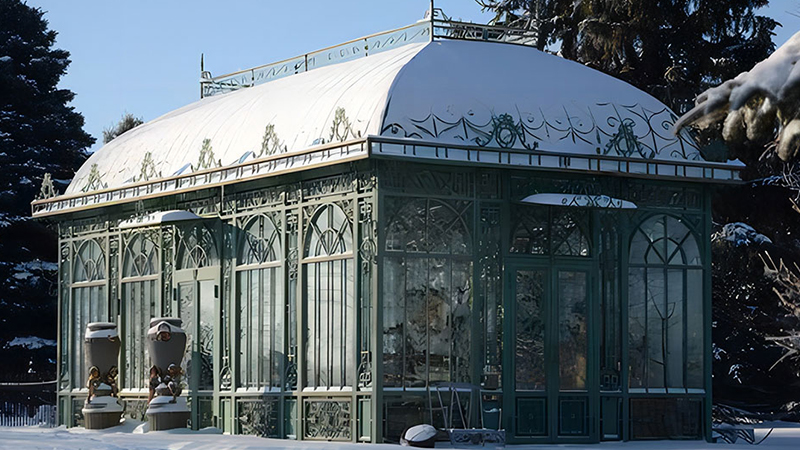
Final Thoughts: Build Once, Stay Protected for Decades
A greenhouse should not just look beautiful—it should perform reliably under pressure.
Choosing a redundant protection system means:
- Fewer repairs
- Lower long-term costs
- Greater safety for people and property
It is not about spending more. It is about avoiding bigger losses.