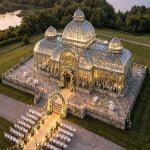
Luxury hotels today are no longer focused only on providing accommodation—they are creating memorable experiences. Guests increasingly expect elegant spaces filled with natural light, greenery, and architectural beauty. This is why iron conservatories have become a popular feature in high-end hotels around the world.
An iron greenhouse combines classic architectural elegance with modern functionality. Whether used as a restaurant, lounge, wedding venue, or wellness space, a well-designed conservatory can enhance both the guest experience and the hotel’s overall value. However, choosing the right conservatory for a hotel requires careful planning. Factors such as style, layout, climate, durability, and guest comfort all play important roles.
In this article, we will explore how hotels use conservatories, what design features create relaxing spaces, and how to choose the most suitable iron conservatory for a luxury hospitality project.
1. Why Conservatories Fit Luxury Hotel Design
1.1 Creating Elegant Guest Experiences
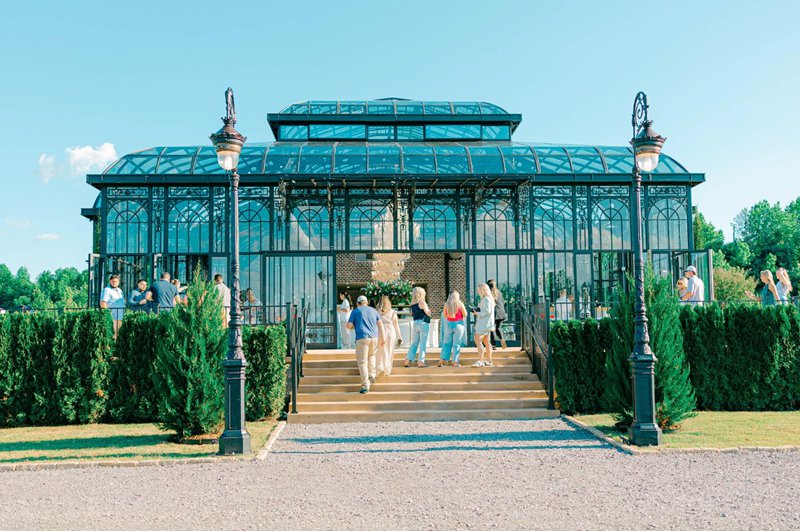
Luxury hospitality is closely connected to atmosphere and emotion. Conservatories naturally create a refined and sophisticated environment through glass roofs, iron structures, and open garden-style interiors. The combination of architecture and natural light gives guests a sense of exclusivity and relaxation.
Traditional wrought iron conservatories are especially suitable for luxury hotels because they reflect timeless European elegance while also offering a unique visual identity.
1.2 Bringing Nature Into Hospitality Spaces
Modern travelers increasingly appreciate spaces that connect them with nature. Conservatories allow hotels to introduce plants, flowers, palm trees, and garden landscapes into indoor environments without exposing guests to changing weather conditions.
Natural greenery can help reduce stress, improve mood, and create a more relaxing hotel experience.
1.3 Increasing Natural Light and Openness
Large glass roofs and walls allow sunlight to flood interior spaces throughout the day. Compared with conventional hotel interiors, conservatories feel brighter, more open, and more welcoming.
Natural daylight also enhances dining experiences, lounge areas, and social spaces, making guests more likely to spend time there.
1.4 Enhancing Hotel Branding and Social Media Appeal
Beautiful conservatories often become the visual centerpiece of luxury hotels. Guests frequently photograph conservatory restaurants, palm courts, and glass lounges for social media, helping hotels increase online visibility organically.
A visually impressive conservatory can strengthen a hotel’s branding and make the property more memorable.
1.5 Creating Flexible Multi-Use Spaces
One of the biggest advantages of conservatories is flexibility. Hotels can use them for:
- Fine dining
- Afternoon tea
- Weddings
- Cocktail events
- Guest lounges
- Wellness spaces
- Seasonal celebrations
This flexibility increases the commercial value of the hotel space.
2. Popular Ways Hotels Use Conservatories
2.1 Conservatory Restaurants and Afternoon Tea Areas
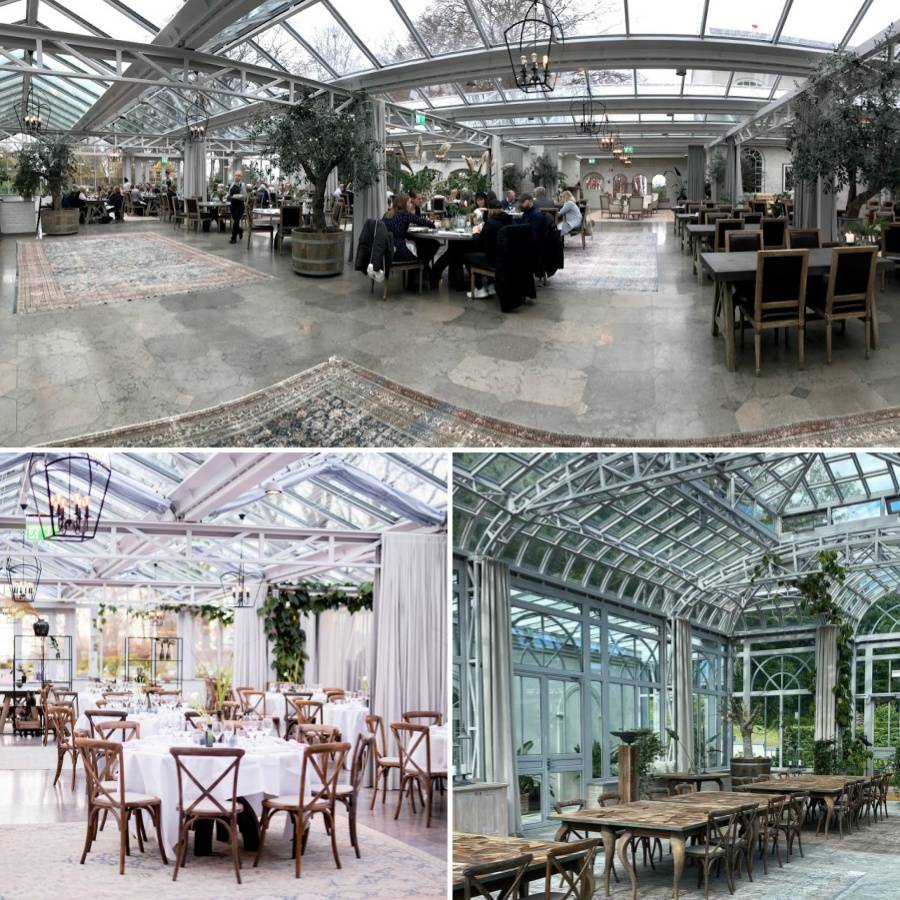
Many luxury hotels use conservatories as elegant dining spaces. Natural lighting and garden surroundings create a calm and upscale atmosphere that is perfect for breakfast service, afternoon tea, and romantic dinners.
Glass conservatories also allow guests to enjoy outdoor-style dining experiences throughout the year.
Famous Example: The Palm Court at The Plaza Hotel
The famous Palm Court at The Plaza Hotel is one of the most iconic hotel conservatory dining spaces in the world. Its stained-glass dome and elegant palm-filled interior have made it a symbol of luxury hospitality.
2.2 Hotel Lounges and Palm Courts
Conservatories are ideal for guest lounges because they create peaceful environments filled with natural light and greenery. Hotels often place comfortable seating, indoor plants, and decorative fountains inside these spaces to encourage relaxation.
Palm courts became especially popular in grand European hotels during the late nineteenth century and continue to influence luxury hospitality design today.
2.3 Wedding and Event Spaces
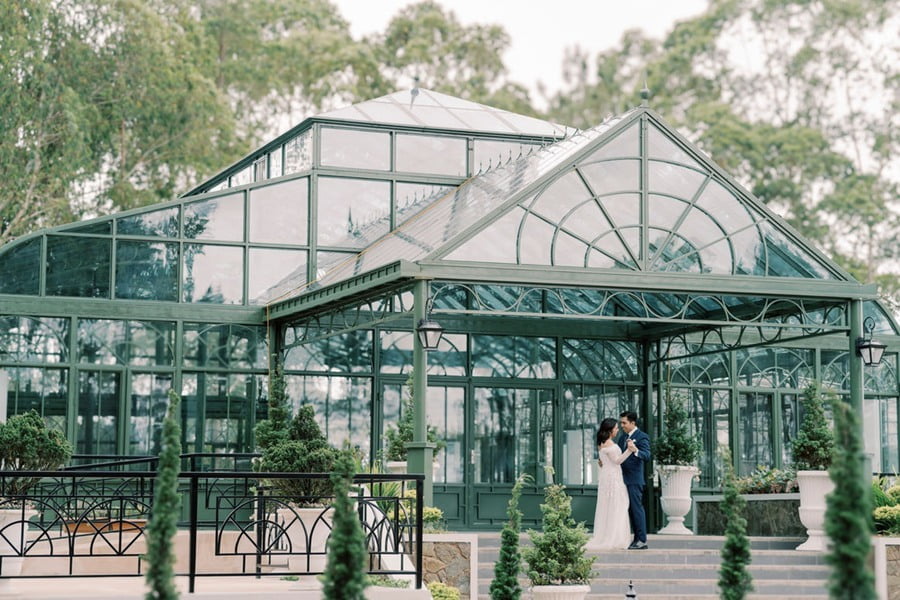
Luxury hotels increasingly use conservatories as wedding venues and event halls. The combination of glass ceilings, natural daylight, and elegant architecture creates an ideal environment for ceremonies and receptions.
Conservatories are also highly valued for wedding photography because of their bright and romantic atmosphere.
2.4 Spa and Wellness Areas
Wellness tourism has become an important part of the luxury hotel industry. Some hotels transform conservatories into:
- Spa lounges
- Yoga spaces
- Indoor garden retreats
- Relaxation areas
The greenhouse-like environment naturally supports wellness-focused experiences.
2.5 Luxury Lobby Extensions
Large conservatories can also function as dramatic hotel entrances or lobby extensions. Glass atriums and palm-filled reception areas create unforgettable first impressions while making the hotel feel larger and more luxurious.
3. How to Choose the Right Iron Conservatory for a Hotel
3.1 Match the Conservatory Style to the Hotel Architecture
The conservatory should complement the overall architectural style of the hotel.
Traditional and Historic Hotels
Historic hotels often benefit from Victorian or Edwardian-style conservatories featuring:
- Decorative ironwork
- Arched windows
- Cresting details
- Ornamental columns
- Modern Luxury Hotels
Contemporary hotels may prefer:
- Minimal steel frames
- Clean geometric lines
- Large uninterrupted glass panels
- Simpler structural detailing
A mismatched conservatory design can reduce the visual harmony of the property.
3.2 Define the Main Purpose of the Space
Hotels should clearly determine how the conservatory will be used before starting the design process.
Different functions require different design priorities:
| Function | Important Considerations |
| Restaurant | Ventilation, seating layout, lighting |
| Lounge | Comfort, acoustics, greenery |
| Wedding Venue | Open layout, ceiling height |
| Spa Area | Privacy, temperature control |
Defining the primary function early helps avoid costly design changes later.
3.3 Choose the Right Size and Layout
The size of the conservatory should match the hotel scale and guest capacity.
- Small Boutique Hotels
- More intimate conservatories
- Cozy seating arrangements
- Garden-style atmosphere
- Large Luxury Resorts
- Large-span conservatories
- Multi-functional event spaces
- Grand palm courts or atriums
Hotels should also consider traffic flow, furniture arrangement, and operational efficiency.
3.4 Consider Climate and Environmental Conditions
Climate greatly affects conservatory performance.
- Hot Climates
- Hotels may require:
- Roof ventilation systems
- Sun shading
- Thermal-control glass
- Cold Climates
Important features include:
- Double glazing
- Heating systems
- Insulated frames
- Coastal Areas
Hotels near the ocean should prioritize:
- Anti-corrosion treatment
- Weather-resistant coatings
- Durable metal finishes
3.5 Focus on Guest Comfort and Functionality
A conservatory should not only look beautiful—it must also feel comfortable.
Hotels should carefully plan:
- Indoor temperature
- Ventilation
- Noise control
- Seating comfort
- Lighting conditions
Poorly designed conservatories can become too hot, too cold, or too noisy, reducing guest satisfaction.
3.6 Pay Attention to Structural Durability and Maintenance
Hotel conservatories experience heavy daily use, so durability is essential.
High-quality wrought iron structures offer:
- Strong load-bearing capacity
- Long-term structural stability
- Better customization possibilities
- Hotels should also choose:
- Rust-resistant finishes
- High-quality glass systems
- Durable flooring materials
Easy maintenance is especially important for commercial hospitality projects.
3.7 Select High-Quality Glass and Iron Materials
The quality of materials directly affects appearance, energy efficiency, and longevity.
Hotels should prioritize:
- Tempered or laminated safety glass
- Powder-coated iron structures
- Thermal insulation glazing
- UV-resistant materials
High-quality materials reduce maintenance costs over time while improving guest comfort.
4. Design Features That Make Hotel Conservatories Relaxing
4.1 Large Glass Roofs and Natural Daylight
Natural light is one of the main reasons conservatories feel relaxing. Bright environments create a stronger connection to nature and improve the overall atmosphere.
4.2 Indoor Landscaping and Greenery
Plants soften architectural spaces and create calm environments. Luxury hotel conservatories often include:
- Palm trees
- Tropical plants
- Flower displays
- Indoor gardens
Greenery helps guests feel more relaxed and connected to nature.
4.3 Comfortable Seating and Soft Furnishings
Relaxation depends heavily on furniture design. Hotels should combine:
- Lounge chairs
- Sofas
- Soft textiles
- Flexible seating layouts
Comfort should always balance elegance.
4.4 Water Features and Natural Materials
Many luxury conservatories include:
- Stone fountains
- Marble flooring
- Natural wood accents
- Decorative water elements
These features create soothing sensory experiences that enhance relaxation.
4.5 High Ceilings and Open Space
Tall ceilings make conservatories feel spacious and airy while also improving airflow.
Open layouts prevent the space from feeling crowded during events or peak guest hours.
4.6 Lighting Design for Day and Night
A successful hotel conservatory should feel beautiful both during the day and at night.
Hotels often combine:
- Natural daylight
- Chandeliers
- Warm ambient lighting
- Accent lighting for plants and architecture
Lighting dramatically affects the atmosphere of the space.
4.7 Seamless Indoor-Outdoor Connection
The best conservatories create a natural transition between interior and exterior spaces.
Hotels often connect conservatories with:
- Gardens
- Terraces
- Courtyards
- Outdoor dining areas
This strengthens the guest’s connection to the surrounding landscape.
5. Famous Luxury Hotel Conservatories Around the World
5.1 The Plaza Hotel — The Palm Court
The Palm Court at The Plaza Hotel is one of the most famous hotel conservatory spaces in the world. Its iconic stained-glass ceiling, elegant columns, and indoor palm trees have defined luxury hospitality for more than a century.
5.2 Conservatorium Hotel Amsterdam
This luxury hotel successfully combines historic architecture with modern conservatory-inspired interiors. It demonstrates how contemporary hospitality can integrate glass and iron structures while maintaining a refined atmosphere.
5.3 Corinthia Grand Hotel Astoria Brussels
Corinthia Grand Hotel Astoria Brussels
This restored Belle Époque hotel features a stunning palm court with glass ceilings and elegant historic detailing, showing the enduring appeal of conservatory-inspired hotel spaces.
5.4 Historic Victorian Palm Courts in Europe
Many famous European luxury hotels adopted palm courts during the Victorian era. These grand conservatory-style spaces became symbols of sophistication and social gathering, influencing hotel architecture worldwide.
6. YouFine Case: Europe Top Spa & Golf Resort Project
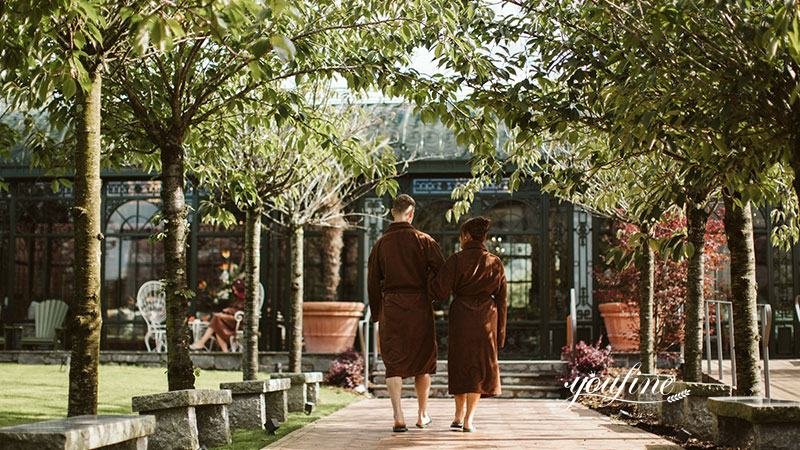
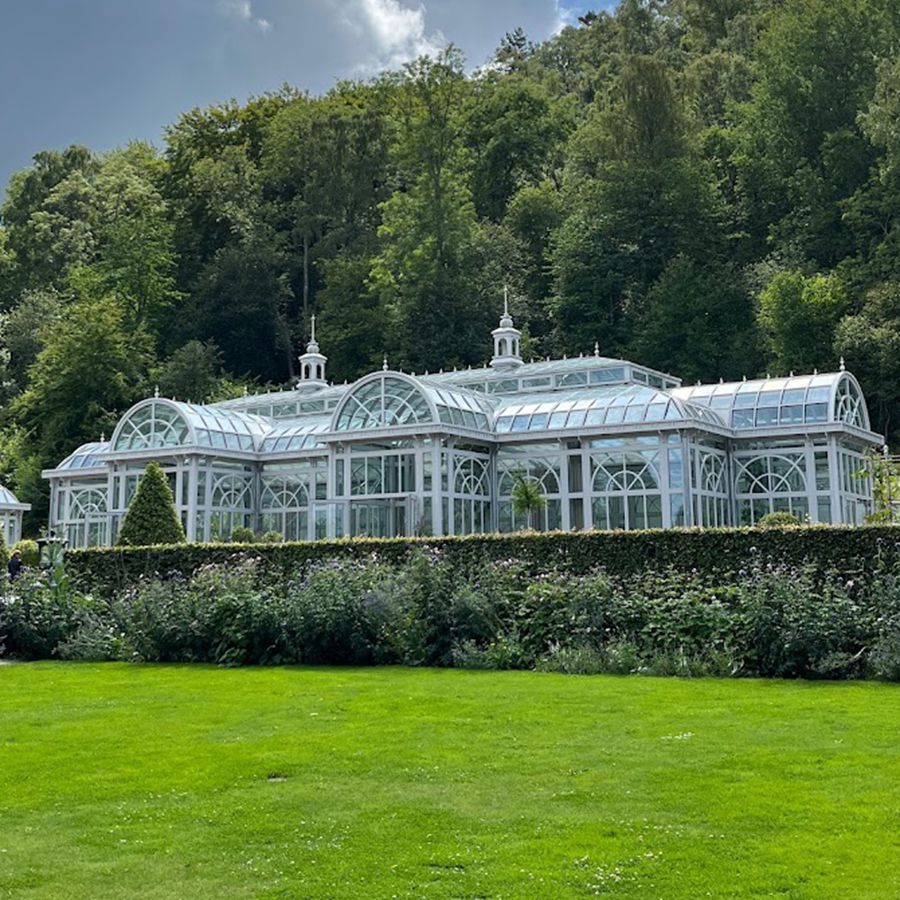
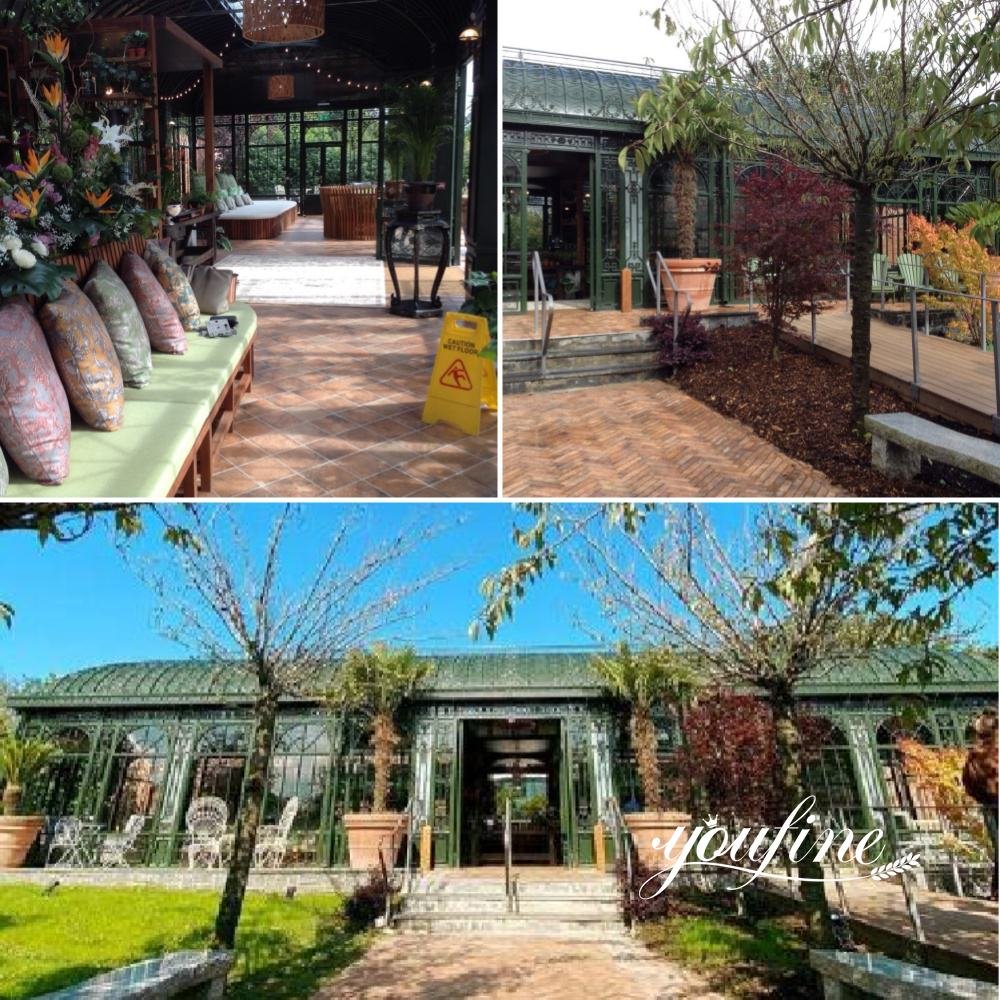
In 2017, we completed a custom iron greenhouse project for a luxury spa and golf resort in Northern Ireland. The structure was installed in 2018 and is now fully used by hotel guests as a wellness and relaxation space.
The conservatory measures 20m × 6m and was designed as a garden-style “Palm House” for the resort’s 4-star spa and award-winning restaurant environment.
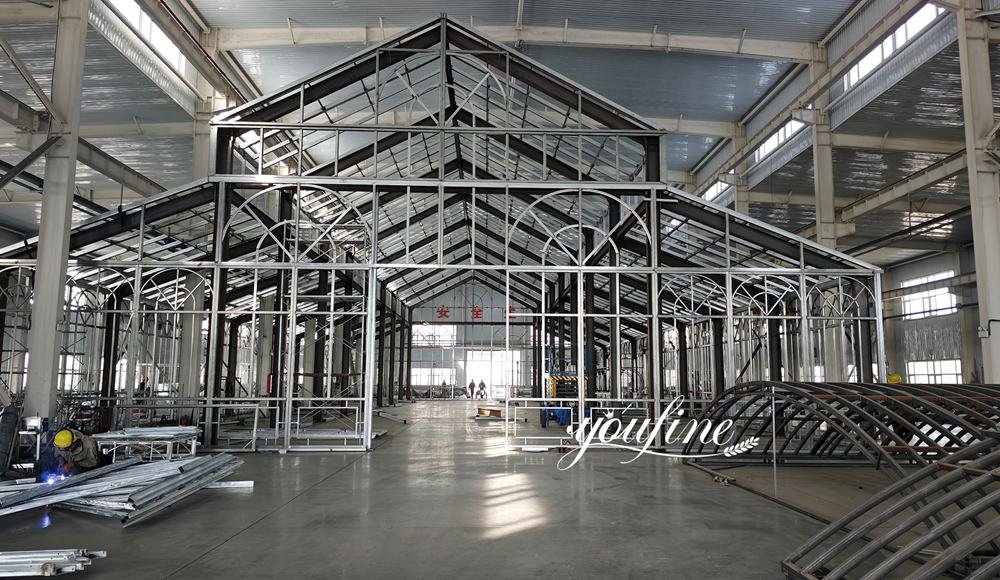
Before production, the project went through three rounds of detailed discussions with the resort manager (a highly experienced international buyer), our design team, sales team, and company director. The process focused on design details, structural safety, and government approval requirements.
To support approval procedures, we provided full engineering data, including:
- Gravity load calculations
- Wind load calculations
- Structural drawings
For projects requiring permits, we always assist clients with technical documentation. Even when approval is not required, we still produce detailed drawings before manufacturing to ensure accuracy.
After installation, the client was highly satisfied and named the conservatory “The Palm House.” Inspired by the concept of forest bathing, the space allows guests to immerse themselves in nature, helping reduce stress and enhance relaxation.
The project also became a strong marketing asset for the resort, widely promoted across Facebook, Instagram, Twitter, and YouTube, attracting significant visitor interest and increasing guest engagement.
Conclusion
Iron conservatories have become an essential architectural feature for modern luxury hotels, combining elegance, functionality, and a strong connection to nature. From dining spaces and lounges to weddings and wellness areas, they help hotels create memorable guest experiences while increasing commercial value.
Choosing the right conservatory requires careful attention to design style, intended use, climate conditions, comfort, and long-term durability. When these factors are properly balanced, a conservatory can become one of the most iconic and profitable spaces in a hotel.
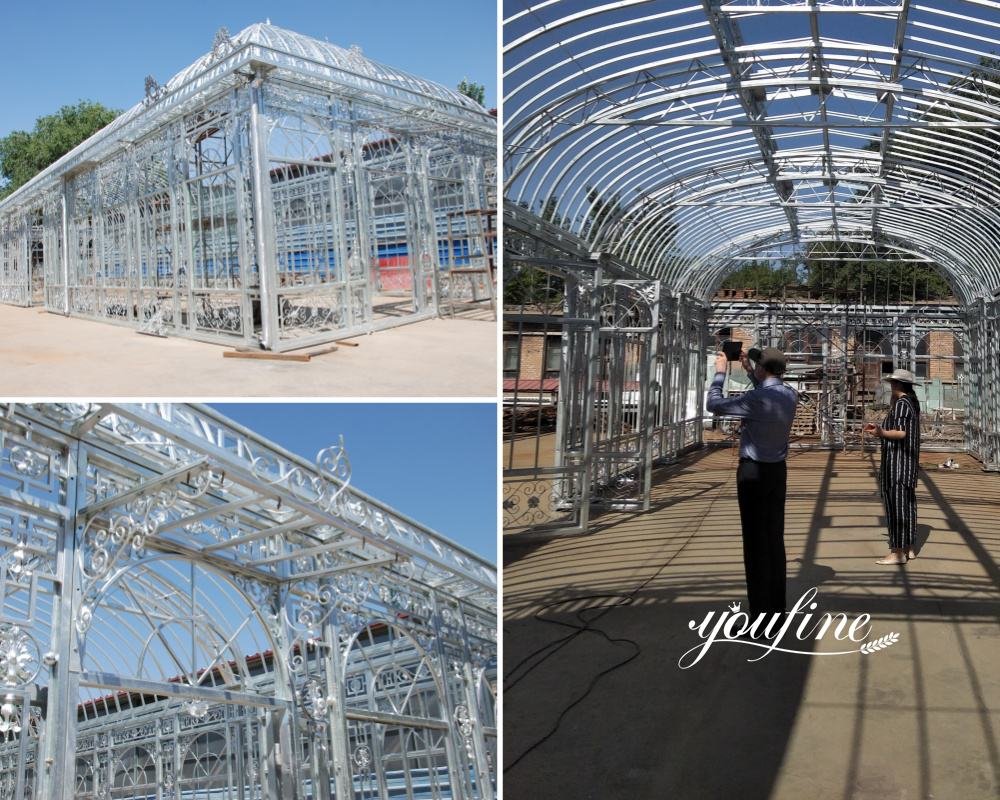
If you are planning a hotel conservatory project or looking for a custom wrought iron conservatory solution, feel free to contact YouFinw. Our professional design and engineering team can provide tailored drawings, structural calculations, and full project support—from concept to installation—to help you bring your ideal hotel conservatory to life.