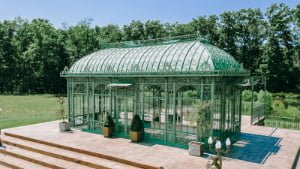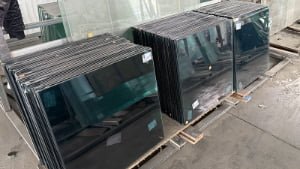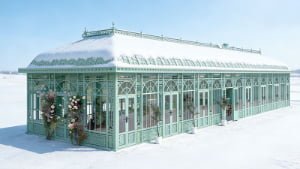
My starting point when evaluating a wrought iron gazebo for a coastal wedding venue is simple: I look beyond the decorative design to the metal, protective finish, and installation details. A gazebo can look beautiful on delivery yet develop rust early if salt reaches exposed metal through damaged paint, poorly protected joints, or hidden water traps.
The short answer
Yes, a wrought iron gazebo can rust quickly near the ocean—but rapid rusting is not inevitable. Its performance depends on the exposure, surface preparation, coating system, construction details, and maintenance. There is no reliable universal timeline based only on distance from the beach.
In this guide, I explain what I would check before purchasing, which protective finishes deserve consideration, and how to keep a wedding gazebo attractive without overlooking its long-term maintenance needs.

Why Coastal Wedding Venues Are Harder on Wrought Iron Gazebos
Salt Spray and Airborne Salt Deposits
Salt can reach a gazebo through direct sea spray or airborne deposits, even when the structure is not on the beach itself. These deposits can hold moisture against surfaces and accelerate corrosion where the protective coating is breached.1
I would not judge exposure by distance alone. Prevailing winds, surrounding buildings, elevation, and shelter all affect how much salt reaches the structure. A covered or sheltered surface can still collect salt if rain does not wash it clean.
Humidity, Rain, and Condensation
Iron and steel corrode when moisture and oxygen reach the metal. Salt makes that environment more aggressive.
Coastal humidity, overnight condensation, and repeated rainfall can keep vulnerable areas damp. I pay particular attention to overlapping decorative pieces, base plates, and enclosed sections where moisture may remain after the visible surfaces dry.
Wind Exposure and Weathering
Wind carries salt and can drive moisture into joints. Windblown sand may also wear exposed coatings, while sunlight gradually affects some paint finishes.
For a wedding venue, I would consider decorative attachments too. Drapes, lighting clips, and temporary flower supports can rub against the finish during windy conditions. Soft, non-abrasive attachment methods help avoid unnecessary damage.

What Determines How Quickly a Wrought Iron Gazebo Rusts?
I would compare the whole construction specification, rather than treating “wrought iron” as a guarantee of durability.
| Factor | Typical Options or Conditions | Why It Matters |
|---|---|---|
| Base metal | Traditional wrought iron or fabricated mild steel | Determines the actual material being protected |
| Surface preparation | Cleaning, blasting, or preparation for galvanizing | Affects coating adhesion and coverage |
| Protective finish | Paint, powder coating, galvanizing, or combined systems | Determines resistance to the exposure |
| Construction details | Welds, overlaps, hollow sections, and drainage | Can create hidden corrosion points |
| Maintenance | Salt removal, inspection, and prompt repairs | Helps prevent local damage from spreading |
My practical conclusion is that a strong specification must address all five factors. An attractive topcoat cannot compensate for poor preparation or trapped water.
The Quality and Specification of the Metal
The term “wrought iron” is often used commercially for decorative structures made from mild steel. 2Traditional wrought iron and modern mild steel are different materials, but both need corrosion protection in coastal conditions.
I recommend asking the supplier to identify the actual material in writing. Section sizes, wall thicknesses, connection details, and structural design also matter. Extra metal thickness is not a substitute for a suitable coating.
Surface Preparation Before Painting
A coating needs a clean, properly prepared surface. Oil, loose rust, welding residue, and mill scale—the oxide layer left by steel manufacturing—can interfere with adhesion.3
I would ask how the metal is prepared before coating. Abrasive blasting uses propelled abrasive material to clean and texture the surface. Other preparation methods may be appropriate for particular systems, but the method should match the coating manufacturer’s requirements.
The Protective Coating System
“Outdoor paint” is not a complete specification. Neither is “powder coated.”
I want to know the pretreatment, primer where applicable, finish coat, intended exposure, and specified coating thickness. Compatibility between layers matters, as does correct curing. A well-applied system is more meaningful than a broad promise of weather resistance.
Welding Joints, Decorative Details, and Water Traps
Weld edges, tight scrollwork, overlapping parts, and bolted connections can be difficult to protect evenly. Hollow sections need appropriate detailing so they do not become concealed moisture reservoirs.
I would request close-up photographs of these areas before shipment. Drainage and ventilation should be designed deliberately, especially if hot-dip galvanizing is planned.
Which Rust-Protection Finish Is Best for a Coastal Wedding Gazebo?
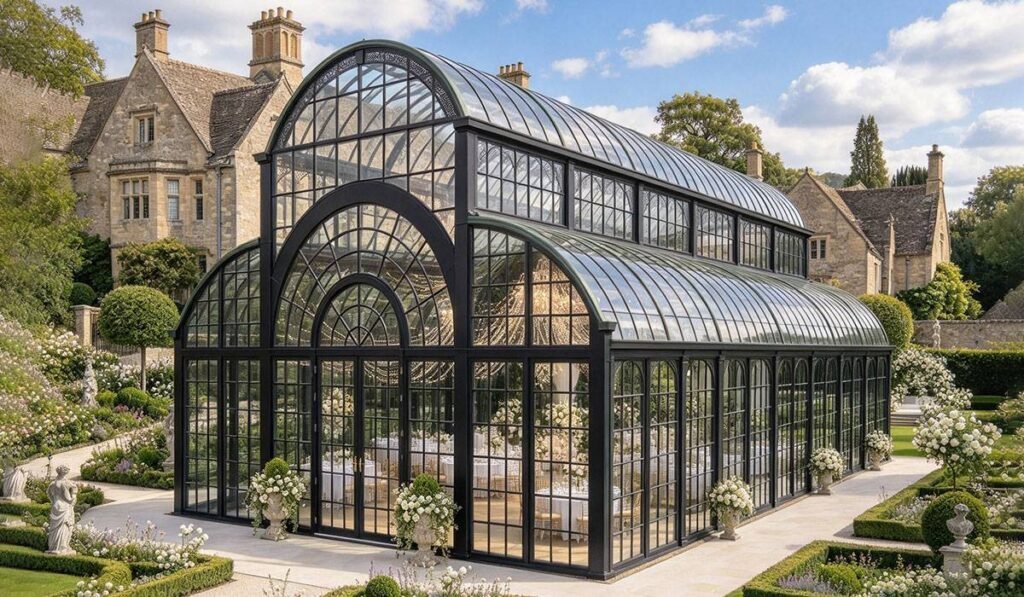
For demanding coastal exposure, I would usually begin by evaluating hot-dip galvanizing combined with a compatible exterior coating. Hot-dip galvanizing coats steel with zinc, which provides a barrier and can protect nearby exposed steel sacrificially.4
A zinc layer plus paint or powder coating is commonly called a duplex system.5 Its suitability still depends on design, application quality, and maintenance.
Here is how I would compare the main options:
| Finish | Main Benefit | Coastal Limitation | What I Would Verify |
|---|---|---|---|
| Paint on prepared bare steel | Flexible color selection and repair options | Damage can expose steel directly | Preparation, primer, topcoat, and repair procedure |
| Powder coating on bare steel | Uniform decorative finish when correctly applied | Chips and weak pretreatment can allow corrosion underneath | Pretreatment and suitability for coastal exposure |
| Hot-dip galvanizing | Zinc protection, including accessible internal surfaces | Appearance may not suit every wedding design | Coverage, drainage, venting, and finish quality |
| Galvanizing plus compatible paint or powder | Zinc protection with a decorative outer finish | Requires proper preparation and layer compatibility | Complete duplex specification and touch-up method |
For a permanent beachfront installation, I would not choose a finish by color alone. The system should suit the actual exposure, and the fabricator should explain how it will protect intricate areas.
Galvanizing also requires planning. Fine details may need cleanup afterward, and unsuitable fabrication can create distortion or processing problems.6 Not every completed gazebo can simply be dipped without design review.
Choosing a finish for your coastal venue? Share your location and design references with our team to discuss your gazebo requirements.

How to Choose a Coastal Wrought Iron Gazebo for a Wedding Venue
Ask for Detailed Coating Specifications
I recommend requesting a written specification before approving the order. It should identify the substrate, preparation method, protective layers, application requirements, and repair procedure.
Ask whether the quoted finish is intended for your coastal conditions. If a supplier offers a coating warranty, read its exposure exclusions and maintenance requirements rather than relying on the headline duration.
Inspect the Details That Are Easy to Overlook
A full-view photograph shows the design, not the quality of every joint.
I would request close-ups of welds, column bottoms, roof connections, decorative intersections, and attachment points. A representative finish sample can help confirm color, texture, and appearance, but it does not prove that the entire gazebo will receive equivalent preparation.
For a sectional gazebo, clarify which connections are completed at the factory and which require work on site.
Consider Installation and Foundation Details
Corrosion protection and structural safety need separate attention. A coastal gazebo must be designed and anchored for the applicable site conditions and local requirements.7
I recommend having the foundation and anchorage reviewed by a qualified local professional. Post bases should not sit in persistent puddles, and interfaces between different metals need appropriate detailing.
If installation involves drilling, cutting, or welding, establish a repair method beforehand. Factory coatings can be damaged during assembly.
Balance Initial Cost and Long-Term Maintenance
I would compare quotations on a like-for-like basis, including responsibilities after delivery.
| Purchasing Factor | What to Clarify | Long-Term Implication |
|---|---|---|
| Protective system | Exact preparation and coating layers | Influences corrosion risk and repair needs |
| Assembly | Bolted sections or site welding | Affects installation work and coating repairs |
| Packing | Protection, restraint, and wrapping method | Helps limit transport damage |
| Maintenance access | Access to roof joints and decorative areas | Affects inspection effort |
| Repair support | Compatible products and instructions | Makes future touch-ups easier |
A lower initial price may still be reasonable, but I would want to understand which tasks and risks remain with the venue. You could learn more: How to Choose a Coastal Wrought Iron Gazebo for a Wedding Venue

How to Maintain a Wrought Iron Gazebo Near the Ocean
Rinse Away Salt Deposits Regularly
I recommend gentle freshwater rinsing where site conditions and the coating manufacturer’s guidance permit it. Pay attention to sheltered surfaces that rainfall does not reach.
Avoid aggressive pressure washing, abrasive tools, and unsuitable chemicals. These can damage the finish or force water into joints. The right cleaning frequency depends on actual salt buildup, exposure, and accessibility—not a universal calendar.
Inspect the Gazebo for Early Signs of Rust
I would look for chips, blisters, flaking paint, rust staining, and moisture around connections. Check column bases and less visible underside surfaces as well as the areas guests see.
Rust-colored staining needs investigation: it may come from a fastener or another component rather than the main frame. Photographs help track whether a defect is spreading.
Repair Damaged Coatings Promptly
Small defects are generally easier to address before corrosion spreads beneath surrounding paint.8
I would follow the coating supplier’s repair procedure, including cleaning, removal of unsound material, surface preparation, and compatible replacement coatings. Painting directly over active rust is not a dependable repair.
If there is significant metal loss, cracking, or a loose connection, arrange a professional assessment rather than treating it as a cosmetic problem.
Create a Seasonal Maintenance Schedule
A wedding venue needs maintenance that fits its event calendar. I would combine planned inspections with checks after severe weather or installation of temporary decorations.
| Inspection Point | Main Focus |
|---|---|
| Before the wedding season | Overall finish, connections, drainage, and repairs |
| After strong storms | Salt accumulation, damage, and loose attachments |
| After removing decorations | Scratches, rubbing marks, and trapped moisture |
| During quieter periods | Detailed cleaning and planned coating work |
This approach helps keep repair work away from important event dates.
Is a Wrought Iron Gazebo Still Worth It for a Beach Wedding Venue?
Yes, it can be worth considering if the venue values its decorative character and accepts a realistic maintenance commitment.
I would favor it when the design, coastal protection, installation plan, and maintenance access are all clearly specified. I would reconsider an inadequately protected structure exposed to frequent direct spray, especially if the venue cannot inspect or clean it reliably.
The useful question is not whether iron can rust—it can. My purchasing question is whether the proposed construction and maintenance plan make that risk manageable for this particular venue.
Custom Wrought Iron Gazebos for Coastal Wedding Venues by YouFine
For an inquiry to You Fine Art Sculpture, I recommend starting with a clear coastal-site brief rather than only an inspiration photograph. The supplied business information does not establish a particular coating system, engineering service, or warranty, so I would request written confirmation of those items.
Include the intended dimensions, design references, installation location, site photographs, exposure conditions, preferred color, delivery access, and event deadline. Ask for the proposed metal specification, coating system, assembly method, packing plan, and maintenance instructions.
My priority would be to confirm the protection and installation requirements before approving decorative details or production.

FAQs
1. How soon can a wrought iron gazebo rust near the sea?
I would not promise a fixed timeframe. Exposed metal can begin corroding relatively quickly, while a properly protected structure may perform much better. Exposure, coating defects, and maintenance determine the outcome.
2. Is powder coating alone enough for a coastal gazebo?
I would not assume so from the name alone. Pretreatment, coating formulation, coverage, and site exposure matter. For demanding coastal conditions, I would also evaluate galvanizing beneath a compatible decorative coating.
3. Does galvanizing make a gazebo maintenance-free?
No. I would still inspect it, remove salt deposits as appropriate, and repair damage using suitable methods. Zinc protection reduces corrosion risk but does not eliminate maintenance.
4. Should I choose a white finish for a beach wedding gazebo?
White can suit the venue’s design, but I would approve it based on a sample and the complete coating specification. Rust stains and dirt may be conspicuous on light colors; color itself does not determine corrosion resistance.
5. What should I check when the gazebo arrives?
I recommend checking packing damage, coating chips, supplied components, and connection areas before installation. Photograph any defects and confirm the approved repair procedure before assembly or touch-up work.
Choose the Protection, Not Just the Appearance
A wrought iron gazebo can work well at a coastal wedding venue, but its durability depends on more than its decorative finish. I would prioritize verified material specifications, suitable surface preparation, a coastal-appropriate coating system, well-designed joints, and safe installation.
My final recommendation is to agree on a practical maintenance and repair plan before purchasing. That makes the gazebo’s ongoing care part of the decision, rather than an unexpected responsibility.
Plan Your Coastal Gazebo Inquiry
If you are considering You Fine Art Sculpture, I recommend sending your design references and site details with a request for a written coastal-protection proposal. Confirm the materials, finish, installation responsibilities, and maintenance requirements before placing an order.
Opens our contact window. Please include your venue location, approximate dimensions, and preferred design.
- Atmospheric Exposure – Interactive Map – Corrosion – NASA ↩︎
- Wrought iron – Wikipedia ↩︎
- Standards Committee – SC 05 Surface Preparation – AMPP ↩︎
- Hot-Dip Galvanizing for Corrosion Protection – Galvanized Steel… ↩︎
- Duplex Systems for Corrosion Protection ↩︎
- Design & Fabrication – American Galvanizers Association ↩︎
- 2021 International Building Code (IBC) – SECTION 1609 WIND LOADS ↩︎
- Coating Repair and Maintenance | Corrosion Prevention ↩︎