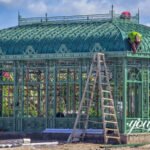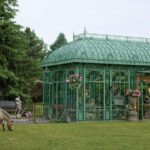
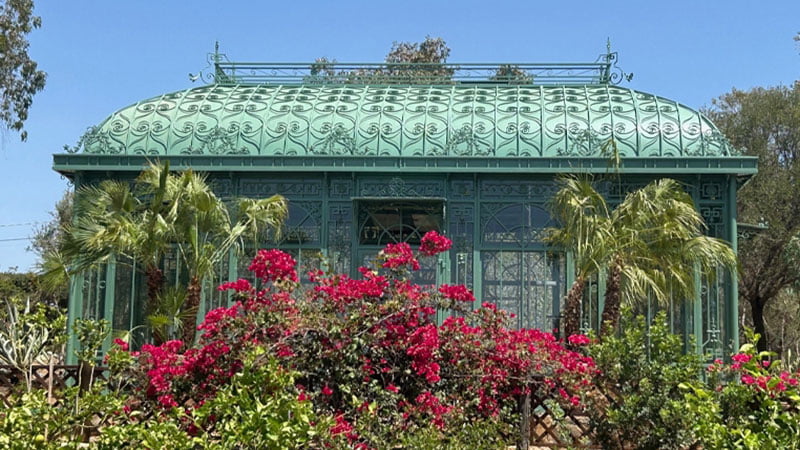
In Europe and North America, a wrought iron greenhouse is often more than a functional space for growing plants. It is an architectural feature, a garden landmark, and an expression of lifestyle. Among the many types of greenhouses available today, wrought iron greenhouses continue to be especially popular across these regions.
1. Cultural and Historical Background
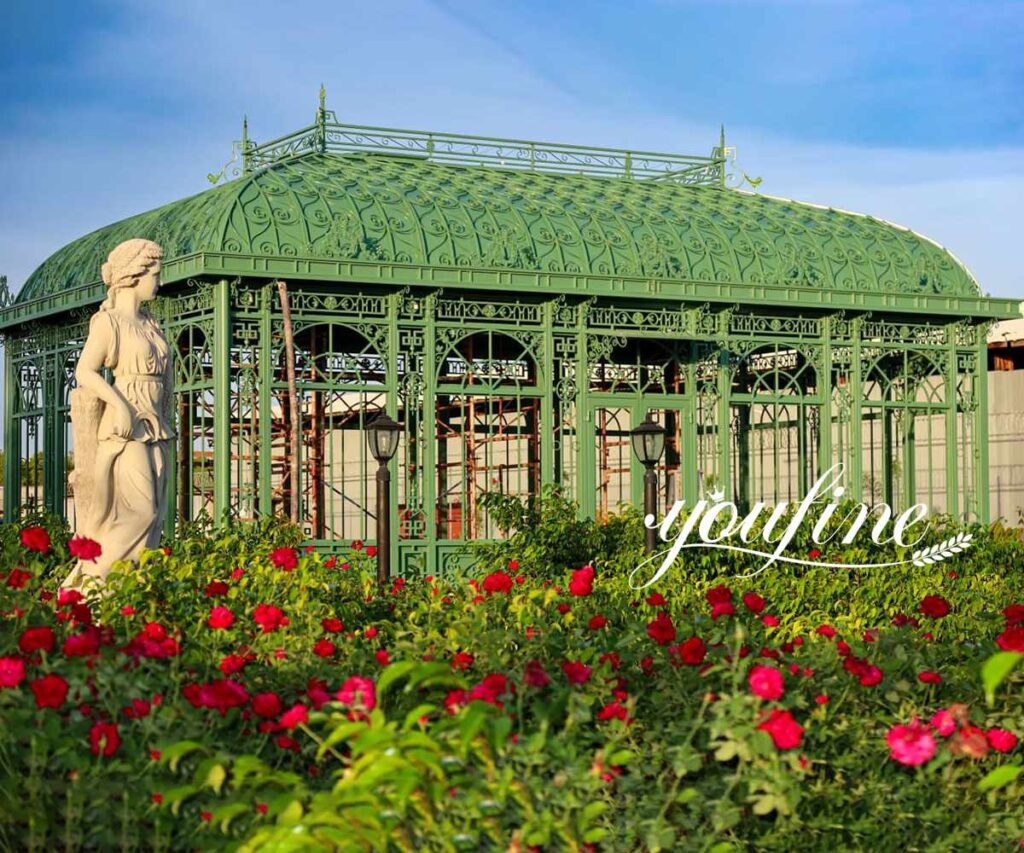
Wrought iron greenhouses have deep roots in European garden history. From Victorian conservatories in England to classical orangeries in France and Italy, iron-and-glass structures have long been associated with botanical collections, noble estates, and architectural refinement.
Unlike lightweight garden structures, these early greenhouses were conceived as permanent buildings, carefully integrated into the surrounding landscape and architecture. This tradition has strongly influenced how greenhouses are still perceived today in Europe and, later, in North America: not as temporary installations, but as enduring garden architecture.
2. Structural Performance and Climate Adaptability
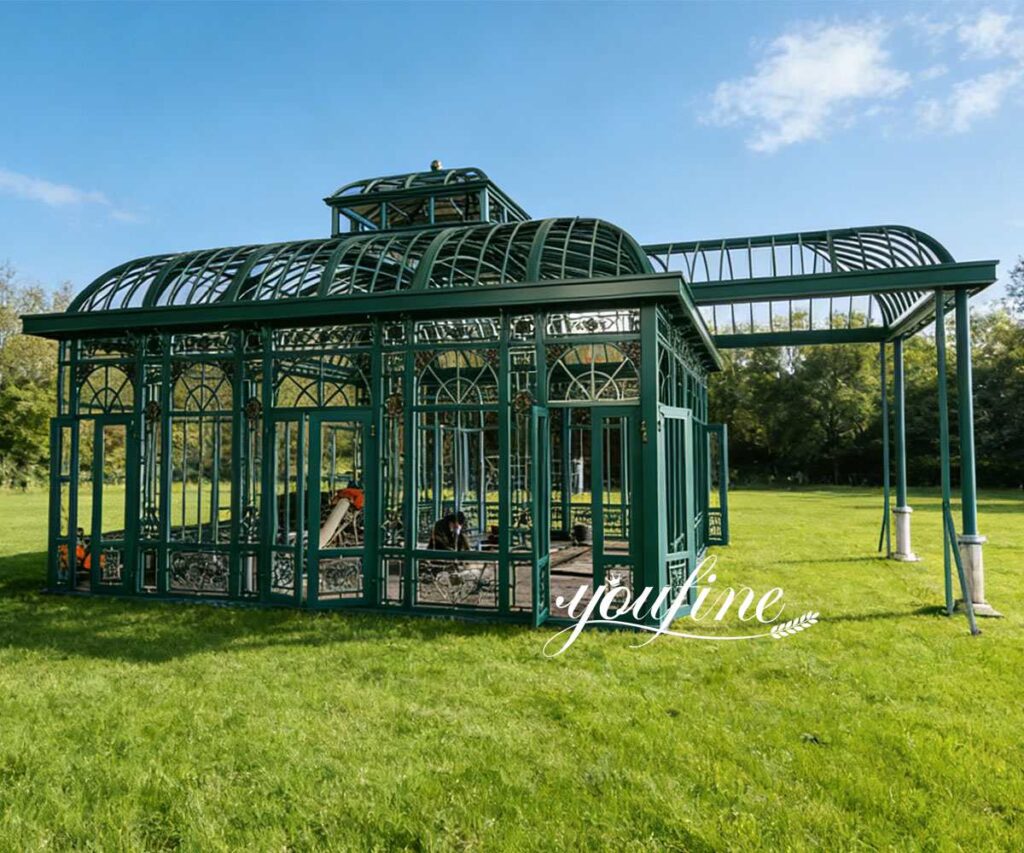
One of the main reasons wrought iron greenhouses remain popular is their structural strength.
Europe and North America experience a wide range of demanding climates, including heavy snow loads, strong winds, and long periods of seasonal weather exposure. Wrought iron structures offer:
- High load-bearing capacity
- Excellent stability for large spans and tall walls
- Long-term safety under extreme weather conditions
Compared to lightweight systems, wrought iron greenhouses are better suited for large-scale, freestanding structures that must remain stable and secure year after year.
3. Custom Design and Architectural Compatibility
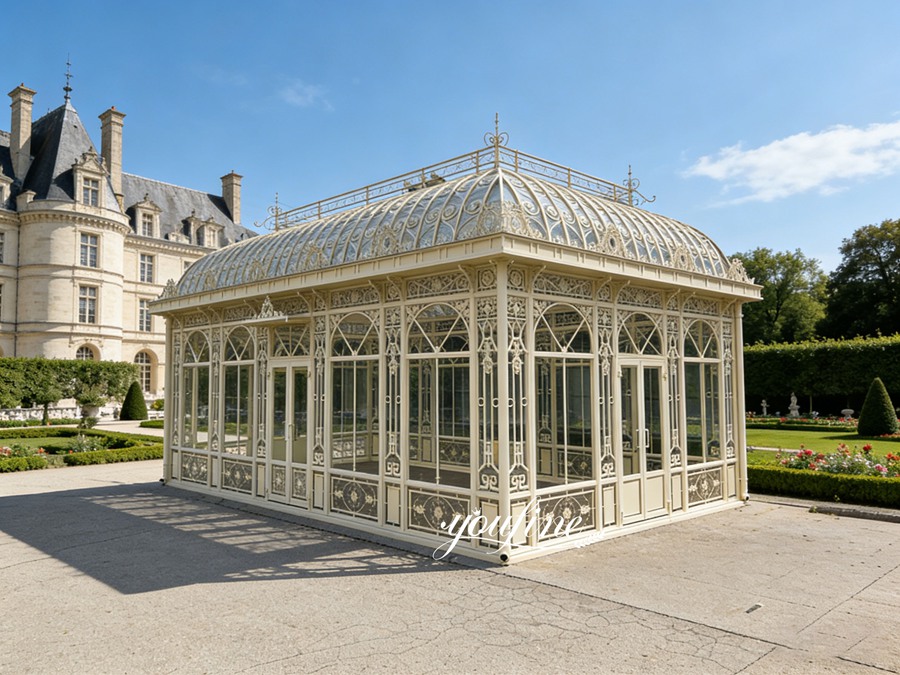
Customization is a key expectation among European and North American clients, especially for private estates, hotels, and historic properties. Wrought iron allows for a high degree of design flexibility, including:
- Custom dimensions and layouts
- Various roof shapes and structural profiles
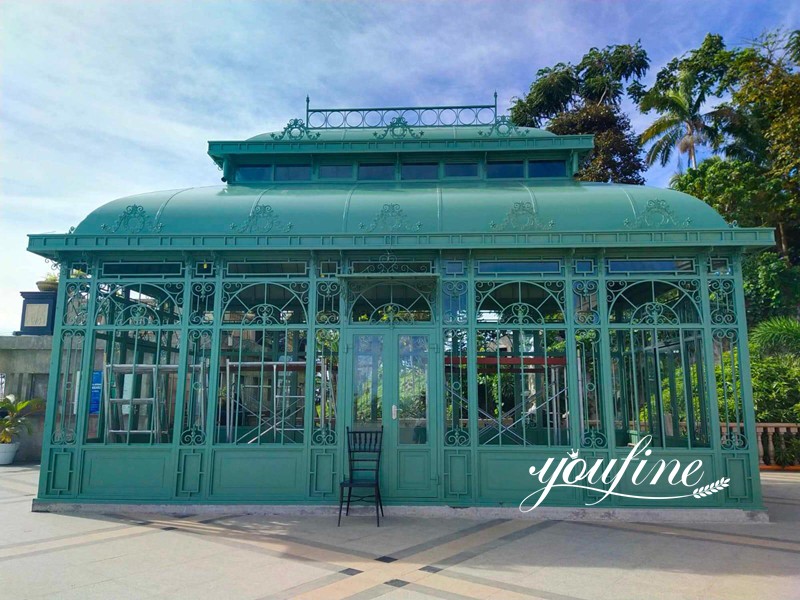
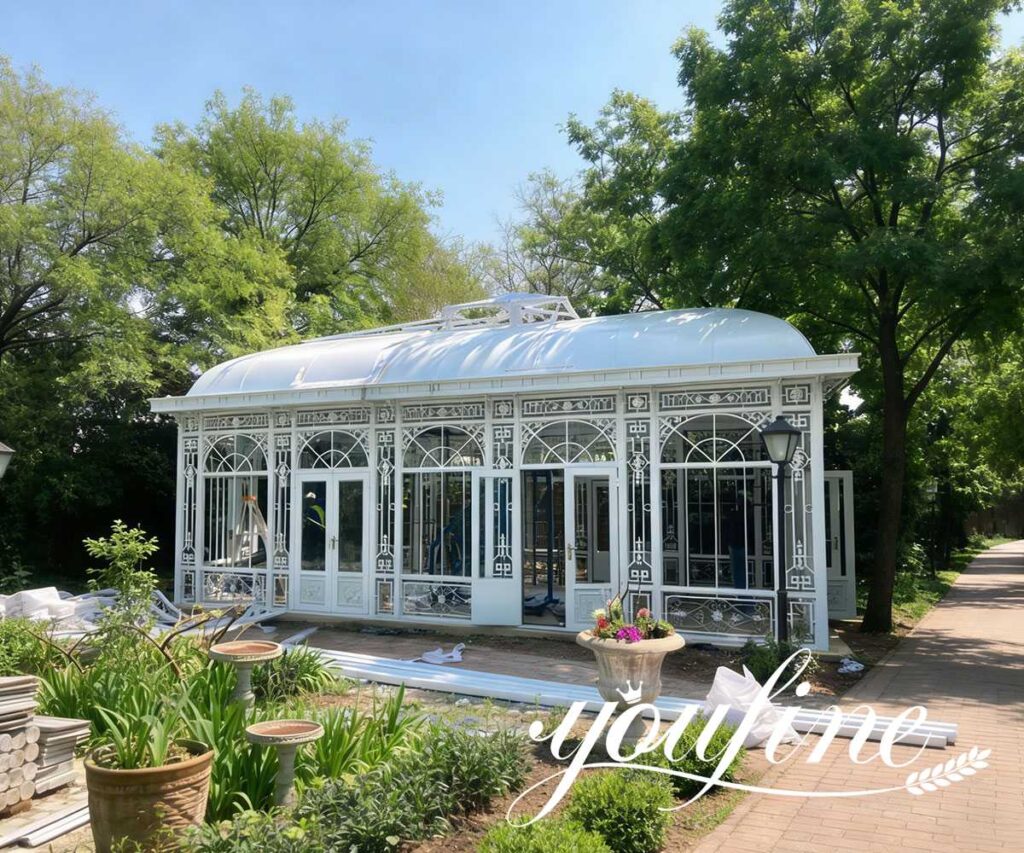
- Decorative elements such as arches, finials, and cresting
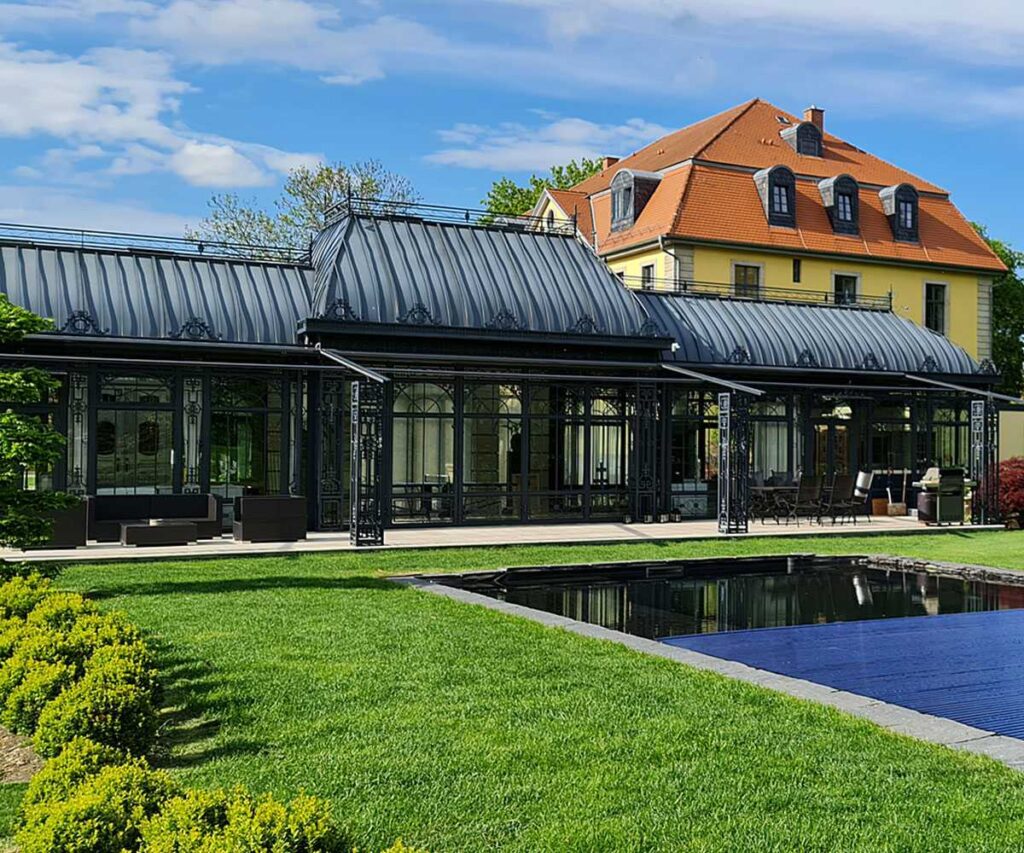
More importantly, wrought iron greenhouses can be designed to complement existing architecture, whether classical, Victorian, Mediterranean, or modern-classical in style. Rather than competing visually with the main building, they enhance the overall harmony of the property.
4. Aesthetic Value and Lifestyle Use
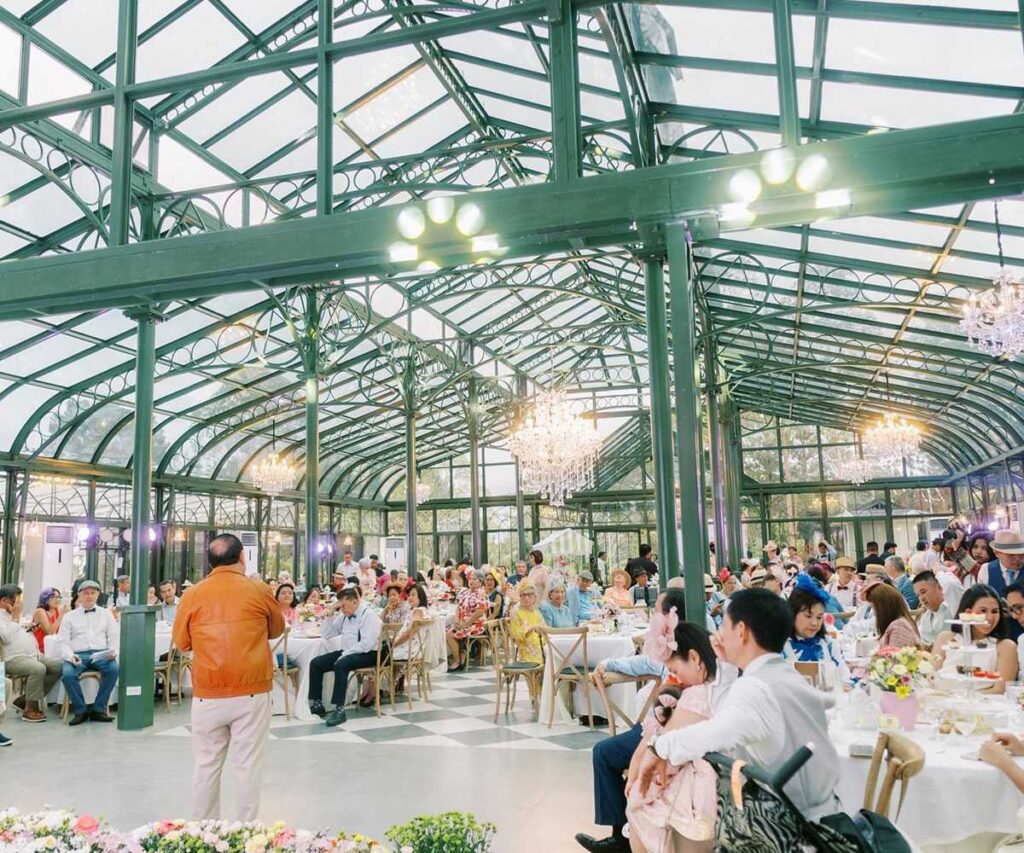
In these markets, a greenhouse is rarely used only for planting. Wrought iron greenhouses are often designed as multi-functional lifestyle spaces, serving as:
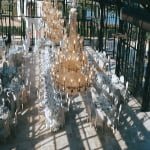
- Event or display spaces
- Garden lounges or reading rooms
- Tea and relaxation areas
The iron profiles, elegant lines, and transparency of glass create a refined visual presence. As a result, the greenhouse often becomes a focal point of the garden, appreciated both from the inside and as part of the outdoor landscape.
5. Durability and Long-Term Investment
Durability is another decisive factor. A well-built wrought iron greenhouse is considered a long-term investment, with a lifespan measured in decades rather than years. With proper surface treatment and periodic maintenance, iron structures can be repainted and preserved instead of replaced.
For many property owners, this longevity translates into:
- Lower long-term replacement costs
- Increased property and landscape value
- A permanent architectural asset rather than a consumable product
6. Sustainability Considerations
Sustainability plays an increasingly important role in purchasing decisions across Europe and North America. Wrought iron greenhouses align well with these values because:
- Iron is highly recyclable
- Long lifespan reduces material waste
- Custom manufacturing avoids mass-produced, disposable structures
Choosing a durable, long-lasting greenhouse is often seen as a more responsible environmental choice than frequently replacing lightweight alternatives.
7. How to Choose the Right Wrought Iron Greenhouse
Selecting the right wrought iron greenhouse involves more than choosing a design. Key factors to consider include:
- Structural and engineering capability
- Experience with European and North American climate conditions
- Custom design and fabrication expertise
- Clear installation guidance and long-term support
A professionally designed wrought iron greenhouse should balance aesthetics, structural integrity, and long-term performance.
Conclusion
Wrought iron conservatories remain popular in Europe and North America because they represent far more than functional garden structures. They combine cultural heritage, structural strength, architectural beauty, and long-term value.
As permanent garden buildings, they stand as lasting statements—structures designed not just for today, but for generations to come.