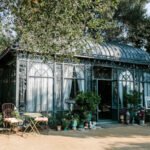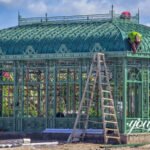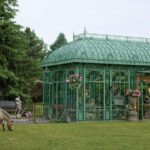
When people envision a wrought iron greenhouse, they often think first of elegance—graceful lines, decorative details, and timeless architectural beauty. However, beneath that refined appearance lies something far more critical: structural design.
The structural design of a wrought iron greenhouse determines not only how it looks, but how it performs over decades. It governs safety, durability, resistance to wind and snow, and the long-term stability of glass and iron alike. Unlike lightweight aluminum or temporary structures, a wrought iron greenhouse is a permanent architectural feature—one that must balance engineering precision with aesthetic refinement.
At YouFine, structural design is never an afterthought. It is the foundation upon which beauty, strength, and longevity are built.
1. The Core Structural Framework
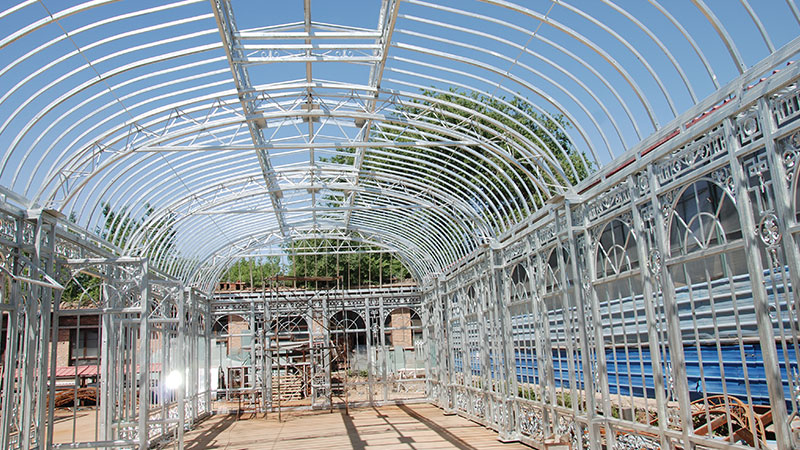
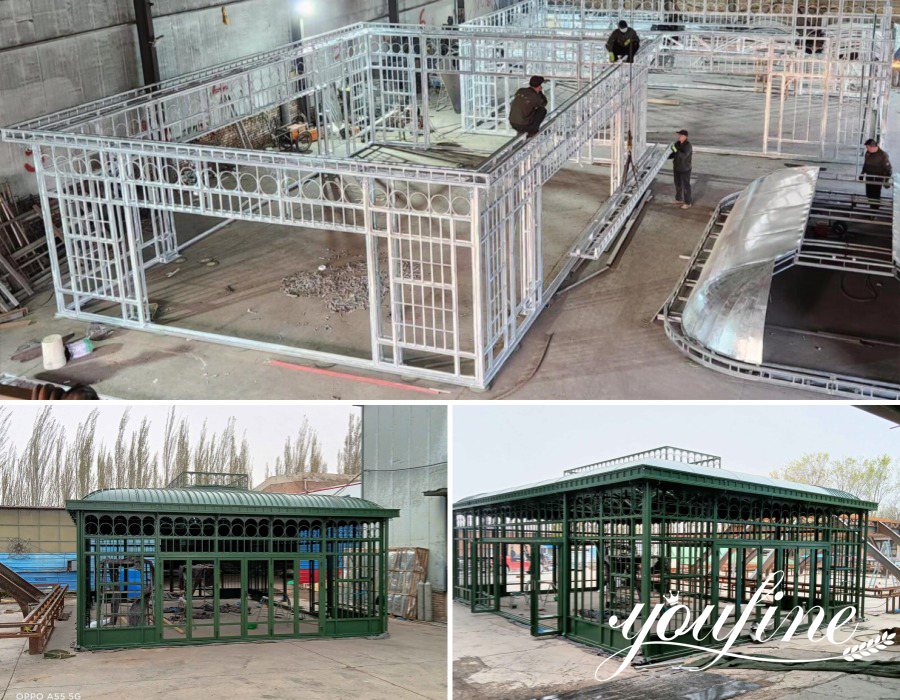
The backbone of any wrought iron greenhouse is its primary structural framework. This includes vertical columns, horizontal beams, roof rafters, and ridge components that together form a rigid and stable skeleton.
Unlike mass-produced greenhouse systems, a well-designed wrought iron greenhouse relies on proportioned steel sections rather than minimal profiles. The dimensions of columns and beams are carefully selected to ensure sufficient load-bearing capacity while maintaining visual harmony.
A properly engineered framework allows for:
- Larger spans without excessive intermediate supports
- Improved resistance to lateral forces such as wind
- Long-term dimensional stability, preventing deformation over time
The result is a structure that feels solid and permanent, not temporary or modular.
2. Load-Bearing Considerations: Designing for Real-World Conditions
Structural design begins with understanding loads—the forces that act on the greenhouse throughout its lifetime.
Key load considerations include:
- Dead loads: the weight of the iron structure itself
- Glass loads: especially important for large roof panels
- Wind loads: varying significantly by geographic location
- Snow loads: critical in colder climates
A wrought iron greenhouse designed without proper load analysis may appear beautiful at first, but it risks long-term failure. Sagging rooflines, cracked glass, and stressed joints are often the result of insufficient structural planning.
By contrast, a greenhouse engineered with local climate conditions in mind ensures both safety and longevity. Structural strength is not about overbuilding—it is about building correctly.
3. Roof Structure Design: Where Engineering Matters Most
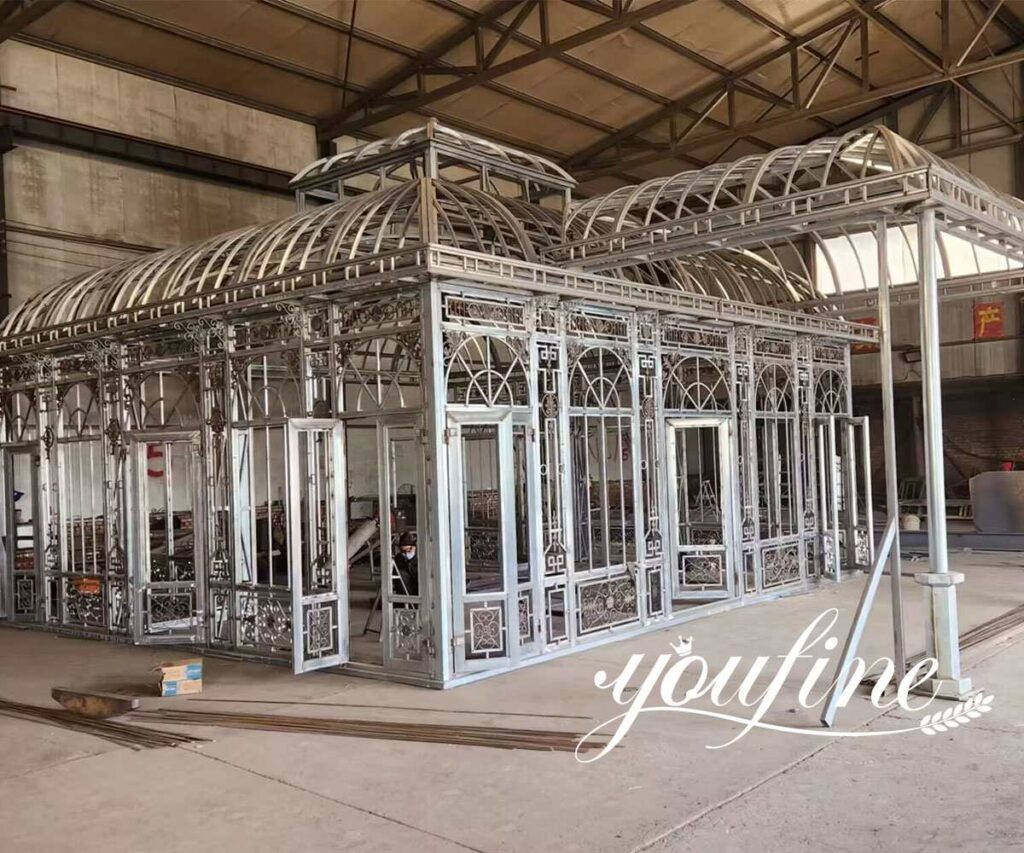
The roof is the most structurally demanding part of a greenhouse. It must support glass panels, shed rainwater efficiently, and resist snow accumulation—all while preserving elegant proportions.
Important design factors include:
- Roof pitch to prevent water and snow buildup
- Rafter spacing to support glass without excessive framing
- Ridge reinforcement for long-span structures
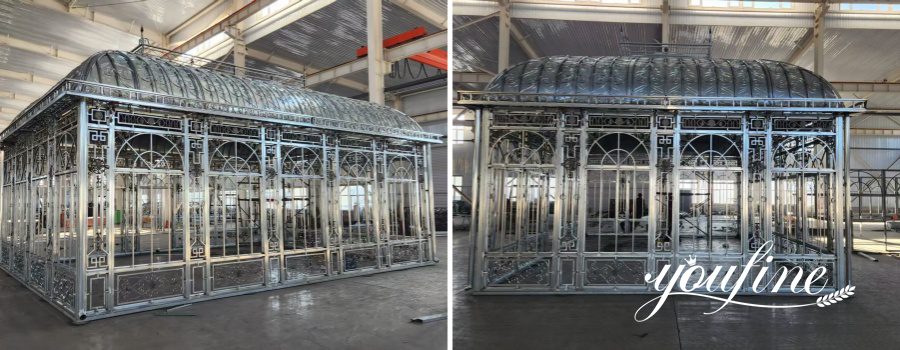
In wrought iron greenhouses, roof design often follows classical architectural forms such as gable, Victorian, or gently curved profiles. These shapes are not chosen solely for aesthetics—many are inherently strong, distributing loads efficiently through arches and triangulated framing.
Good roof structure design ensures that elegance does not compromise performance.
4. Connections and Joints: The Hidden Strength
While columns and beams attract the eye, it is the connections between them that define structural integrity.
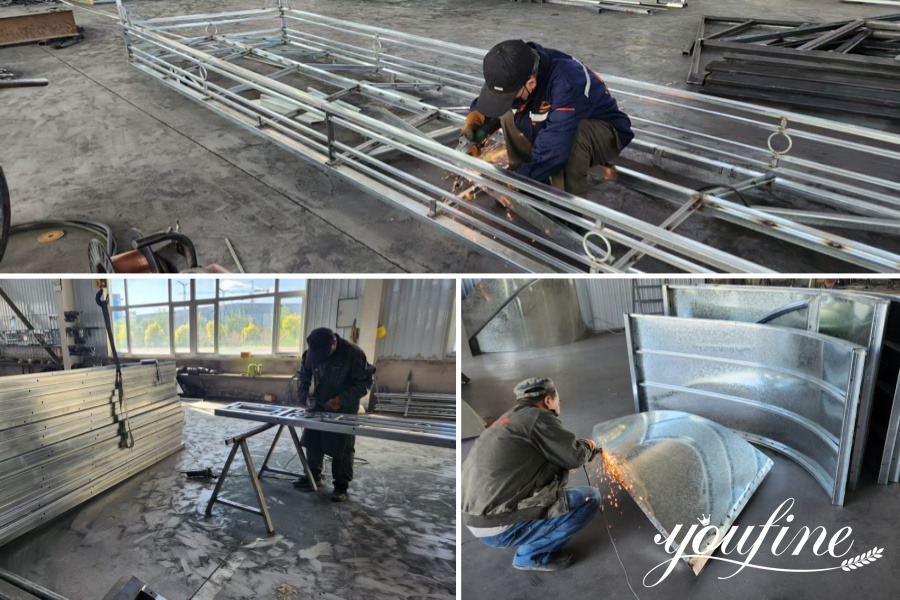
High-quality wrought iron greenhouse design pays close attention to:
- Welded joints for rigidity and permanence
- Bolted connections where future disassembly is required
- Reinforced nodes at high-stress intersections
Poorly designed joints can lead to stress concentration, fatigue, and eventual failure—even when the main structural members are adequately sized.
Well-executed connections remain visually discreet while providing the strength needed to withstand decades of use and environmental exposure.
5. Structural Design and Aesthetics: Engineering in Service of Beauty
One of the defining characteristics of a wrought iron greenhouse is that its structure is also its decoration.
Unlike concealed steel frames hidden behind panels, wrought iron structures are fully visible. This means every column, arch, and beam must serve both a structural and aesthetic purpose.
Successful structural design achieves:
- Balanced proportions between vertical and horizontal elements
- Clear distinction between load-bearing members and decorative features
- Visual rhythm that complements classical or Victorian styling
- True craftsmanship lies in making structural strength appear effortless.
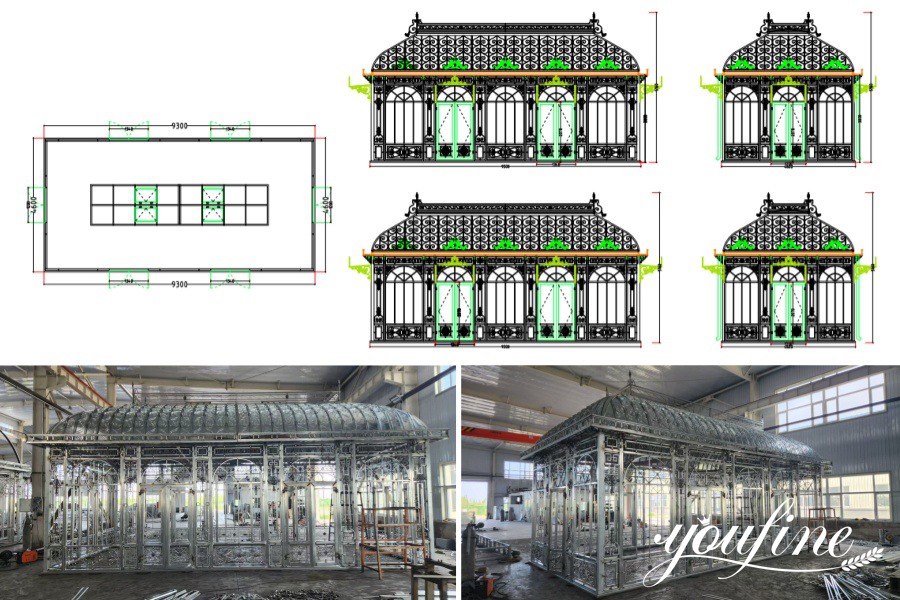
6. Custom Structural Design: No Two Greenhouses Are Alike
A key advantage of wrought iron greenhouse construction is the ability to customize structural design to specific needs.
- Customization may be driven by:
- Site dimensions and layout
- Local climate conditions
- Intended use (private garden, botanical display, commercial space)
- Architectural context of surrounding buildings
Rather than adapting a site to a standard structure, custom structural design allows the greenhouse to integrate naturally into its environment—both structurally and visually.
No two wrought iron greenhouses should share the same structural solution.
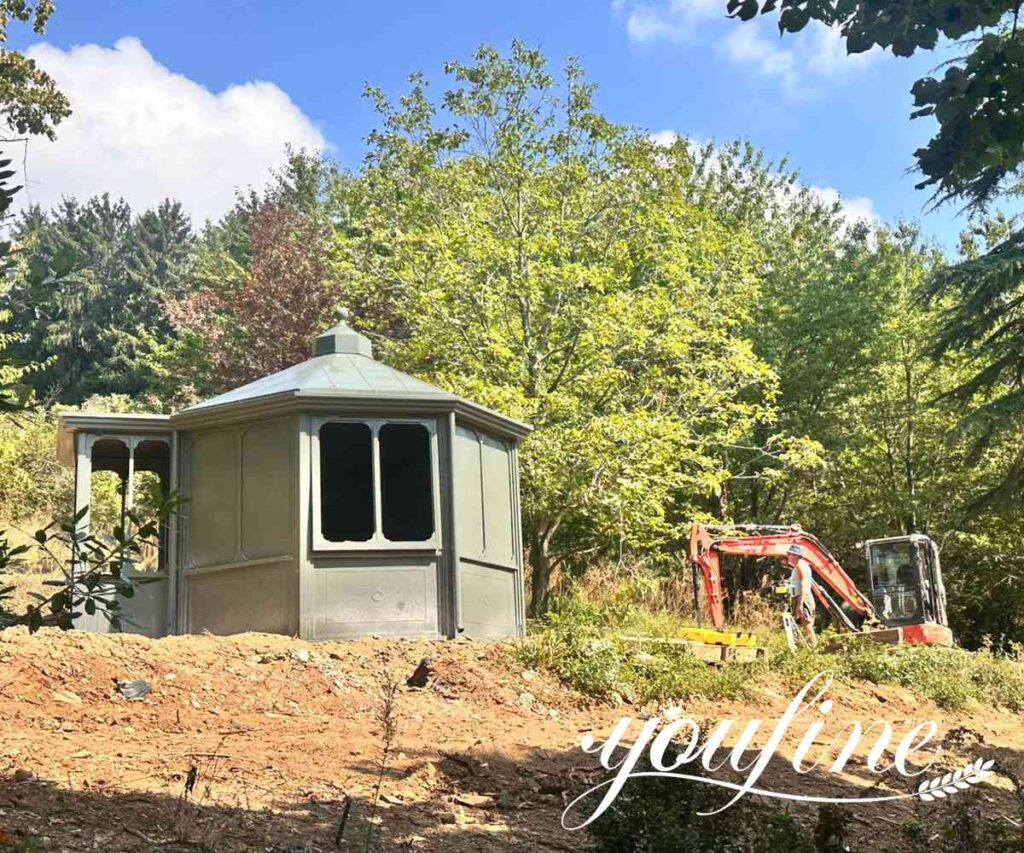
Structural Reinforcement for Large-Span Greenhouses: Why I-Beams Matter Beyond 7 Meters
As the size of a wrought iron greenhouse increases, structural demands grow exponentially—not linearly. When the overall length exceeds 7 meters, standard wrought iron framing alone is no longer sufficient to guarantee long-term stability under real-world loads.
At YouFine, greenhouses with spans or lengths beyond this threshold are reinforced with internal I-beam steel structures. These I-beams are strategically integrated into the primary framework to enhance load distribution without compromising exterior aesthetics.
Why I-Beams Are Necessary for Larger Structures
- Significantly increased load-bearing capacity, especially for roof and ridge areas
- Reduced deflection over long spans, preventing sagging over time
- Improved resistance to wind and snow loads, particularly in demanding climates
- Long-term structural reliability for permanent architectural installations
Rather than relying on thicker decorative iron sections alone, I-beams ensure that structural strength is achieved through proper engineering logic.
Hidden Strength Without Visual Compromise
One of the key challenges in large greenhouse design is maintaining elegance while increasing structural strength. At YouFine, I-beam reinforcements are typically concealed within the roof structure or integrated into upper framing zones, allowing the greenhouse to retain its refined wrought iron appearance.
The result is a greenhouse that:
- Looks light and elegant
- Feels solid and secure
- Performs reliably over decades
- Engineering Decisions That Protect Long-Term Value
Adding I-beam reinforcement is not about overengineering—it is about respecting structural limits and designing responsibly. For greenhouses over 7 meters in length, this approach protects not only the structure itself, but also the glass system, joints, and decorative ironwork connected to it.
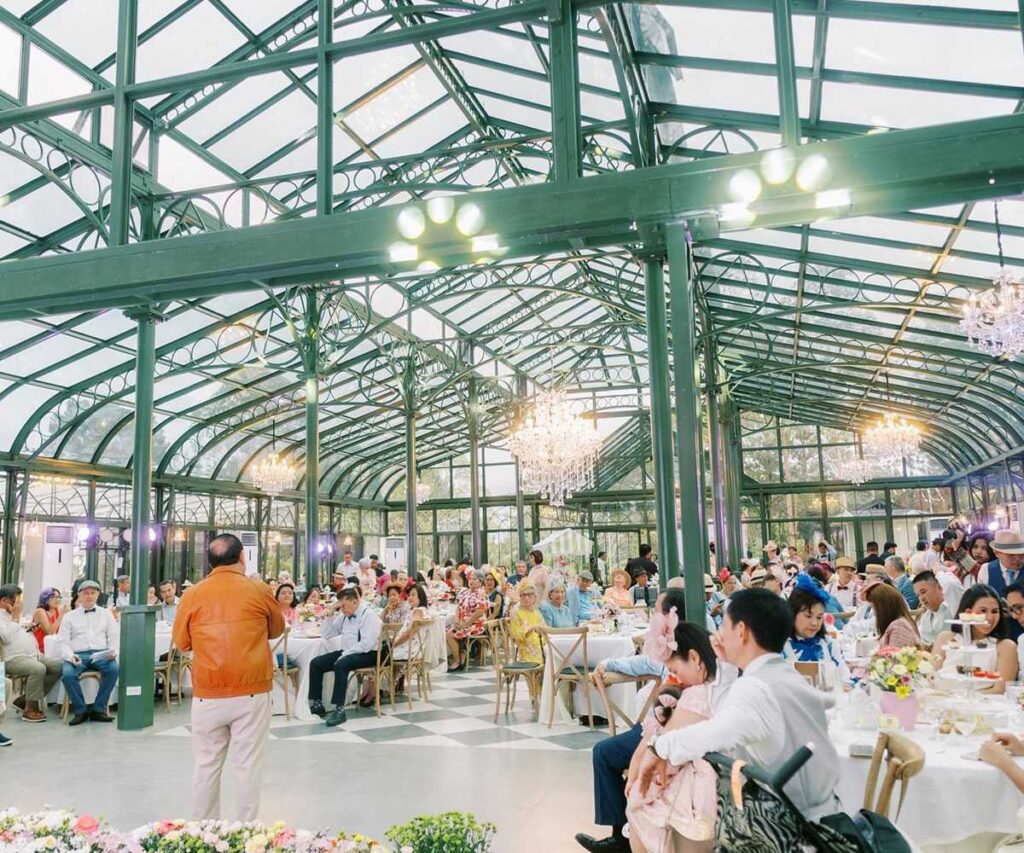
Conclusion: Structure as the Foundation of Lasting Value
The true value of a wrought iron greenhouse lies beneath its elegant exterior. Structural design shapes how the greenhouse performs, how it ages, and how confidently it withstands the elements.
Beauty may draw attention, but engineering earns trust.
For those seeking a wrought iron greenhouse that combines architectural elegance with enduring strength, structural design should always come first.