Extreme weather conditions such as heavy snow, strong winds, and severe storms are becoming increasingly common worldwide. For homeowners, architects, and developers, one critical question often arises:
Can an iron conservatory truly withstand harsh weather conditions?
The answer lies not only in the material itself, but also in engineering standards, structural design, precise drawings, and correct installation.
This blog explains how wrought iron greenhouses are engineered to perform reliably in extreme climates, with a focus on North American and European snow and wind load standards.
Why Weather Resistance Matters for Iron Conservatories
Unlike ordinary garden structures, an iron conservatory is a long-term architectural investment. It must remain safe and stable throughout decades of seasonal changes, including:
- Heavy snow accumulation
- Strong winds and gusts
- Storms, heavy rain, and sudden weather shifts
A well-designed iron conservatory is not only elegant—it is structurally engineered to resist environmental stress year after year.
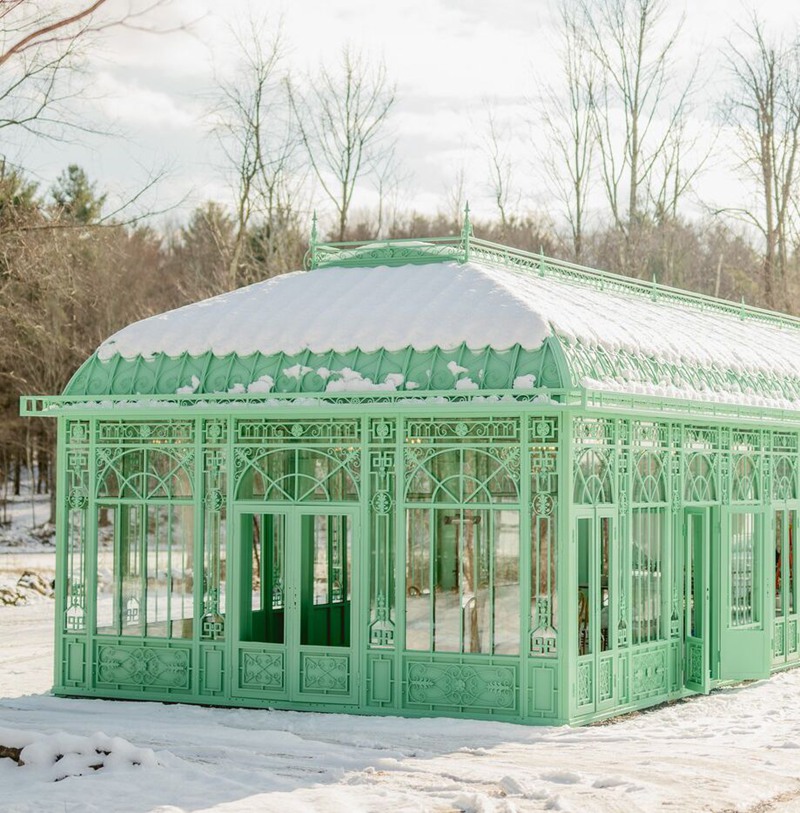
The Advantage of Wrought Iron Framework
High Load-Bearing Capacity of Wrought Iron
Wrought iron offers significantly higher strength and rigidity compared to aluminum or timber structures. Its excellent load-bearing capacity allows it to support:
- Heavy roof loads caused by snow
- Wind pressure and uplift forces
- Long-span glass roofing systems
This makes wrought iron an ideal material for conservatories in demanding climates.
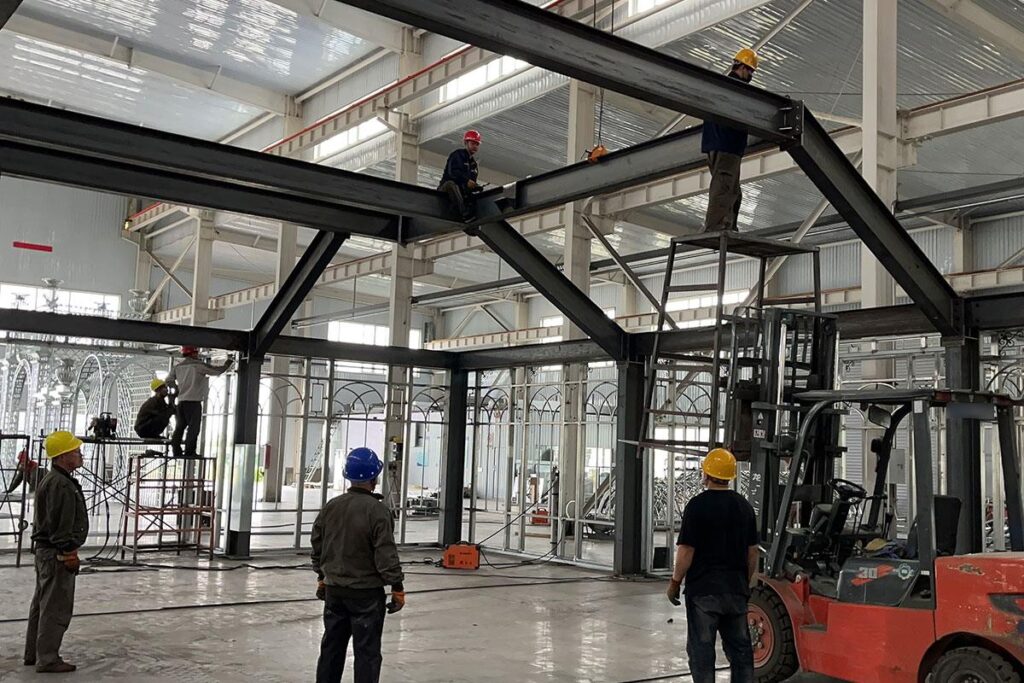
Reinforced Columns and Beams
Iron conservatories are designed with:
- Thickened main columns
- Reinforced roof beams and ridge beams
- Balanced load distribution across the entire structure
This integrated framework minimizes deformation and ensures long-term stability.
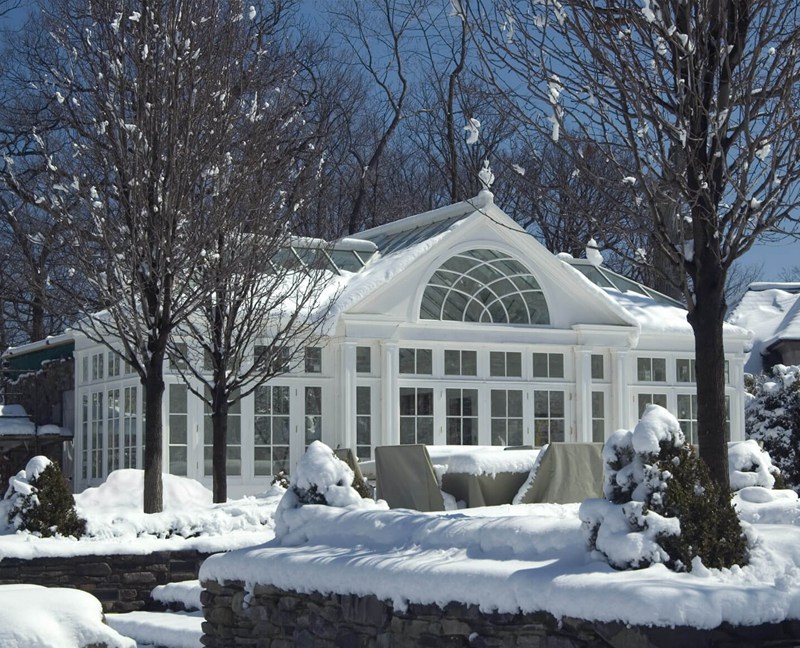
How Iron Conservatories Withstand Heavy Snow Loads
Snow Load Design Standards in North America
In North America, iron conservatories are typically engineered in accordance with:
- ASCE 7 – Minimum Design Loads for Buildings
- International Building Code (IBC)
These standards define ground snow loads, roof snow loads, exposure conditions, and safety factors.
Typical reference values include:
- 30–50 psf in northern and midwestern regions
- 70–100+ psf in mountain or high-snow areas
Snow load calculations consider roof slope, snow drifting, and unbalanced loading.
Snow Load Standards in Europe
European projects follow:
- Eurocode 1 (EN 1991-1-3) for snow loads
- National annexes for specific regions
Characteristic snow loads range from:
- 0.75–1.5 kN/m² in Western Europe
- 2.5–3.0+ kN/m² in Northern and Alpine regions
Iron conservatories intended for heavy snow zones are designed with enhanced reinforcement and structural safety margins.
Roof Design for Snow Shedding
To reduce snow accumulation, iron conservatories often feature:
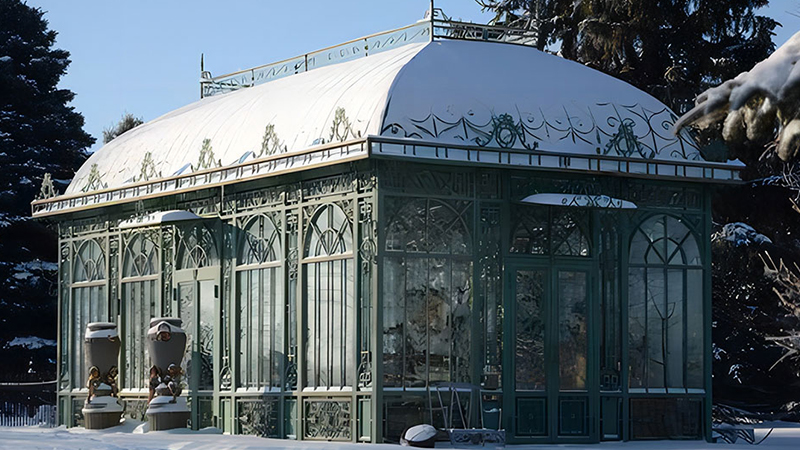
- Sloped or arched roof profiles
- Optimized ridge heights
- Structural layouts that allow snow to slide off naturally
This design approach minimizes long-term stress on the structure.
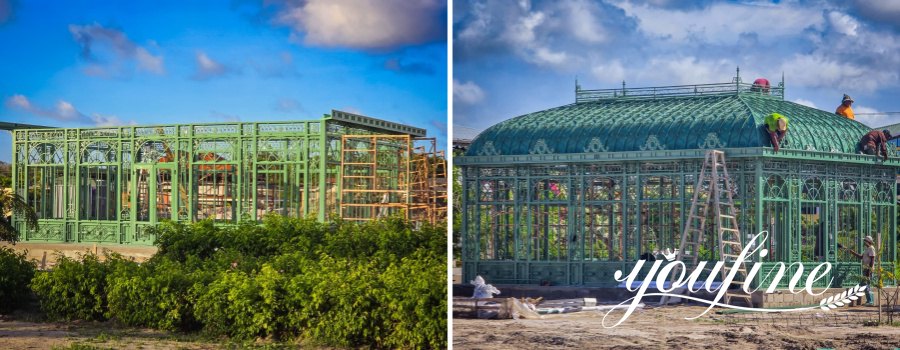
Wind Resistance: Staying Stable in Strong Winds and Storms
Wind Load Standards in North America
Wind resistance design commonly follows: ASCE 7 wind load provisions
Depending on location, design wind speeds may range from:
- 90–110 mph inland
- 120–150 mph in coastal areas
- 150+ mph in hurricane-prone zones
Wind load calculations account for exposure category, structure height, and roof geometry.
Wind Load Standards in Europe
European wind resistance follows: Eurocode 1 (EN 1991-1-4)
Basic wind velocities typically range from:
- 22–26 m/s inland
- 26–30+ m/s in coastal or open terrain areas
Terrain roughness and building shape factors are fully considered.
Wind-Resistant Design Features
Iron conservatories resist wind forces through:
- Aerodynamic roof shapes that reduce uplift
- Rigid frame connections
- Reinforced joints and bracing
- Secure anchoring to concrete foundations
These features ensure stability even during severe storms.
Storm and Rain Protection: Drainage & Corrosion Resistance
Integrated Drainage Systems
Heavy rainfall and storms require effective water management.
Iron conservatories are designed with:
- Built-in drainage channels
- Concealed gutters and downpipes
- Roof slopes that prevent water pooling
This reduces both structural load and long-term wear.
Anti-Corrosion Treatment for Harsh Environments
To withstand rain, humidity, and coastal conditions, iron structures undergo:
- Hot-dip galvanization
- Anti-rust primer coatings
- Outdoor-grade powder coating or paint finishes
These treatments significantly extend the lifespan of the conservatory.
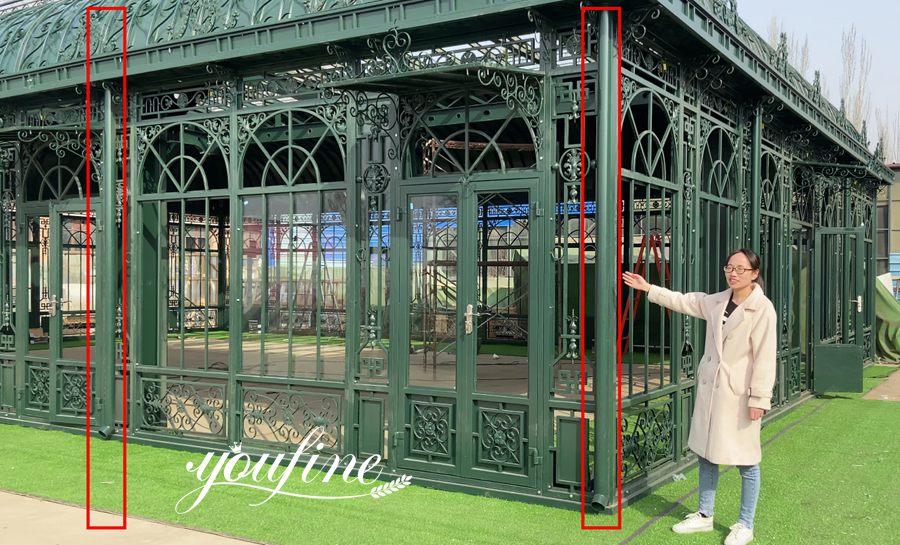
From Engineering Calculations to Reality: YouFine’s Drawings & Installation Support
Meeting snow and wind load standards is not only about calculations—it is about how those calculations are transformed into real structures.
This is where YouFine’s drawing capability and installation guidance make a critical difference.
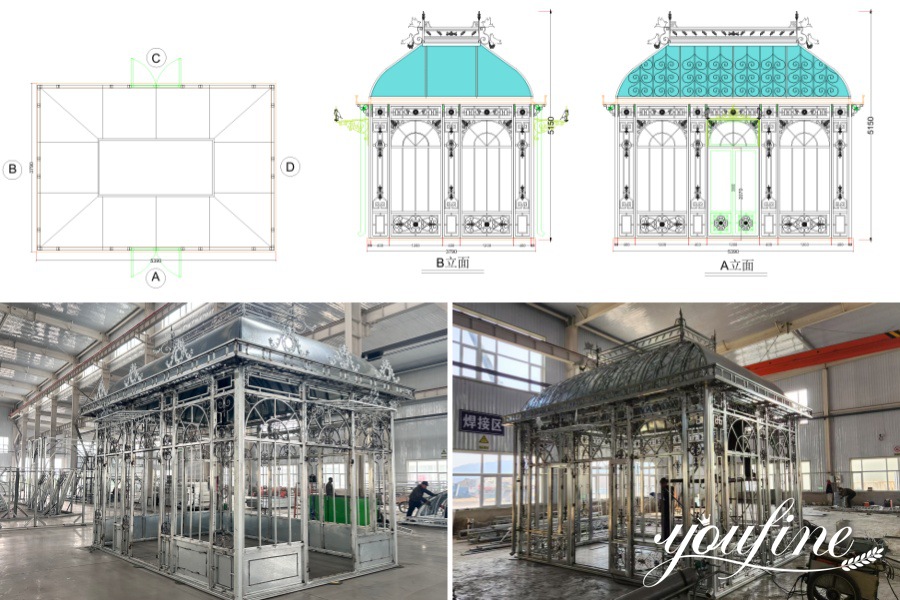
Detailed Shop Drawings Based on Load Requirements
Before production, YouFine provides customized shop drawings tailored to each project’s climate and location.
The drawings clearly define:
- Column and beam dimensions based on snow and wind loads
- Roof structure and slope for snow shedding
- Reinforcement points for high-wind zones
- Connection details for load transfer and wind uplift resistance
By integrating ASCE and Eurocode requirements directly into the drawings, each iron conservatory is engineered for long-term performance.
Structural Nodes Designed for Extreme Weather
Many failures occur not in the main structure, but at connection points.
YouFine’s drawings focus on:
- Beam-to-column joints
- Roof-to-frame connections
- Glass fixing systems under wind uplift
- Anchor bolt and foundation interfaces
These details ensure structural continuity and durability in harsh climates.
Professional Installation Guidance for Global Projects
Even the best design requires correct installation.
YouFine provides clear and professional installation guidance, including:
- Step-by-step installation drawings
- Foundation and anchoring instructions
- Structural assembly sequences
- Reference documentation for local installers
This allows iron conservatories to be installed accurately and safely by local teams worldwide.
Built for International Use, Installed Locally
YouFine iron conservatories are designed to comply with North American and European standards, while remaining practical for on-site installation.
This ensures:
- Compliance with local building codes
- Reduced installation risks
- Consistent performance in different climates
Maintenance Tips After Extreme Weather
After severe weather events, basic checks help ensure longevity:
- Remove excessive snow buildup when necessary
- Inspect anchor points after strong winds
- Check drainage systems after heavy rain
Proper maintenance further extends the lifespan of iron conservatories, often exceeding 30–50 years.
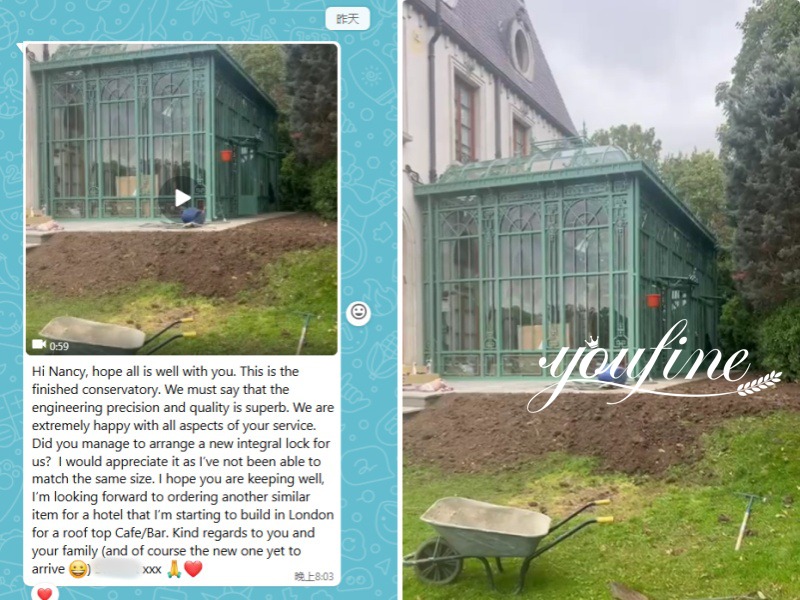
Conclusion: Engineered to Withstand Any Weather
Snow, wind, and storms are not afterthoughts—they are considered from the very first design stage.
- International engineering standards
- High-strength wrought iron structures
- Detailed shop drawings
- Professional installation guidance
Iron conservatories are built to remain safe, stable, and elegant in even the most challenging climates.
If your project is located in a high-snow or high-wind region, engineering precision matters.
Contact YouFine to receive customized iron conservatory solutions, complete with professional drawings and installation support designed specifically for your local climate.